What if I play an instrument not listed in Applaa?
Choose the closest match in terms of range and notation (e.g., use violin fingerings for viola, or flute for piccolo). The skills transfer across similar instruments.
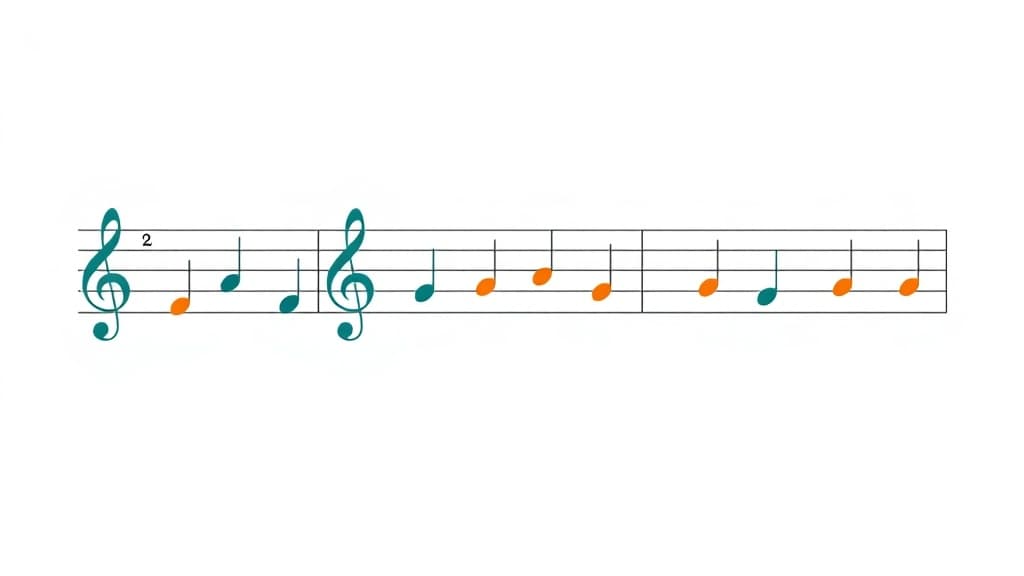
Sight Reading Practice is a personalised music practice companion inside Applaa. Whether learning an instrument for the first time, reading sheet music, or deepening music theory knowledge, it gives patient, clear guidance that builds real, lasting musical ability.
Open Applaa and go to AI Assistants.
Tell it your instrument, current skill level, and what you're practising.
Get tailored exercises, notation help, and technique tips to make genuine, measurable progress.
Read music notation fluently. Here are some of the most popular ways students use Sight Reading Practice every day:
Sight-reading is the ability to read and perform music from a score without prior preparation—an essential skill for every musician from Year 5 onwards. Whether preparing for GCSE Music performance exams, A-Level Music auditions, or simply progressing as an instrumentalist, fluent sight-reading dramatically improves confidence and saves hours of practice time. Applaa's Sight Reading Practice tool presents randomly generated exercises tailored to your instrument and current level, complete with immediate AI feedback on accuracy and rhythm. Students see a fresh musical score, play or sing it, and receive instant assessment of pitch and timing—just like working with a personal music tutor. By practising 10–15 minutes daily with Applaa, learners build the cognitive pathways needed to parse notation quickly, reducing the gap between reading a note on paper and playing it correctly.
Select your instrument—piano, violin, flute, saxophone, guitar, or voice—and choose your current grade level or exam board standard (ABRSM, Trinity, or school music curriculum). Applaa generates a fresh, unseen exercise each time. Read the time signature, key signature, and tempo marking before you begin. Play or sing the piece at a steady, moderate pace without stopping to correct mistakes. Focus on forward momentum and musical flow rather than perfection. After completing the exercise, review the AI's feedback on which notes or rhythms caused errors. Repeat the same type of exercise until consistency improves, then progress to the next difficulty level.
The biggest error is stopping and restarting when you miss a note; sight-reading requires you to 'keep the train on the rails' and continue forward. Many students practice at tempos that are far too fast, reinforcing sloppy habits. Others ignore the key and time signatures, launching into the exercise unprepared. Learners sometimes focus obsessively on individual note accuracy rather than overall phrasing and musicality. Inconsistent practice is also common—sporadic one-hour sessions are less effective than daily 15-minute sessions. Finally, many skip the feedback review, missing opportunities to understand and correct systematic errors.
Getting started
Download Applaa free and select your instrument from the Music Learning module
Complete the quick tutorial on key signatures, time signatures, and notation symbols
Start with Beginner Level 1, practising one new exercise daily without stopping or restarting
After two weeks at each level, progress to the next, building speed and fluency steadily
Give your child the same AI app-building, exam prep and tutoring edge — free for the first month, no credit card needed.
Join 10,000+ students building their first AI-powered apps with Applaa
Choose the closest match in terms of range and notation (e.g., use violin fingerings for viola, or flute for piccolo). The skills transfer across similar instruments.
Yes. GCSE performance requires you to read your chosen pieces confidently. Regular sight-reading practice builds the foundational skill of instantly recognising notation, boosting overall musical fluency.
Applaa's daily practice desensitises you to unseen music. By the time your exam arrives, you'll have tackled thousands of exercises; the exam piece will feel like just another Applaa session.
Absolutely. If they're learning an instrument, Applaa offers beginner-level exercises. Consistent practice from age 9 onwards builds rock-solid sight-reading habits by secondary school.
Sight Reading Practice and 500+ other safe AI assistants are available free inside the Applaa desktop app.
Explore GCSE, 11+, A-Level, and Olympiad revision modules in the Applaa Learning Hub.
Go to Learning Hub