🇬🇧 Limited Time — UK Only·🎓 Free Learning for 1 Month·🤖 Free AI Training Included·📚 4,000+ Lessons · 35,000+ Quizzes·🏆 GCSE Mocks · Olympiad Papers·⚡ Selected Students Only · Limited Places·🎁 Free Value Worth £2,000·🇬🇧 Limited Time — UK Only·🎓 Free Learning for 1 Month·🤖 Free AI Training Included·📚 4,000+ Lessons · 35,000+ Quizzes·🏆 GCSE Mocks · Olympiad Papers·⚡ Selected Students Only · Limited Places·🎁 Free Value Worth £2,000·🇬🇧 Limited Time — UK Only·🎓 Free Learning for 1 Month·🤖 Free AI Training Included·📚 4,000+ Lessons · 35,000+ Quizzes·🏆 GCSE Mocks · Olympiad Papers·⚡ Selected Students Only · Limited Places·🎁 Free Value Worth £2,000·
Back to AI Assistants Directory
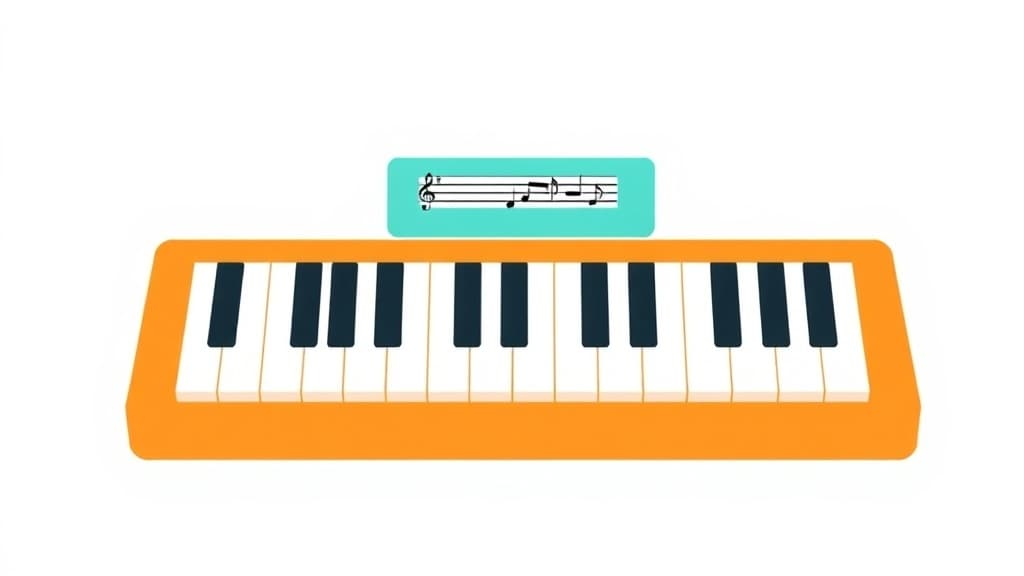
Piano Note Reader — AI study tool illustration
🎼
Music Learning Assistant

Piano Note Reader

Piano Note Reader is a personalised music practice companion inside Applaa. Whether learning an instrument for the first time, reading sheet music, or deepening music theory knowledge, it gives patient, clear guidance that builds real, lasting musical ability.

yearYear 7Year 8Year 9Year 10Year 11Free foreverUK Curriculum
Applaa AI Assistant — Live Preview Live
Help me understand this topic for my school revision.
👨‍💻
I'd love to help! Let's break this down into bite-sized pieces. First, tell me what year group you are in and if you have any homework questions. I will explain it step-by-step with real-world examples, and we can do a quick quiz at the end to make sure it makes perfect sense!

How to use Piano Note Reader

1

Open Applaa and go to AI Assistants.

2

Tell it your instrument, current skill level, and what you're practising.

3

Get tailored exercises, notation help, and technique tips to make genuine, measurable progress.

What you can do with Piano Note Reader

Read sheet music notes. Here are some of the most popular ways students use Piano Note Reader every day:

  • Makes music theory and notation genuinely accessible
  • Supports any instrument at any level — from day one
  • Great for self-learners, music students, and exam preparation
  • Ask unlimited follow-up questions — the AI never loses patience or gives up on you
  • Works alongside any textbook, worksheet, or school resource

Reading sheet music is a fundamental skill for any piano student, yet many learners struggle with translating written notes into finger movements and sounds. Applaa's Piano Note Reader transforms this challenge into an interactive, confidence-building exercise perfect for ABRSM, Trinity, or casual piano learners across ages 5–18. Whether you're preparing for grade exams, learning in school music lessons, or practising at home, this tool helps you develop fluency in reading both treble and bass clefs, understanding note values, and recognizing patterns on the staff. Instead of staring at symbols and feeling confused, you'll see the note, hear it played, and find it on the keyboard—three connections that cement learning into muscle memory. With Applaa's structured lessons and instant feedback, you'll progress from identifying individual notes to sight-reading simple pieces with confidence.

8,500+
Piano students improving weekly
11 notes
Unique pitches to learn in treble clef
100%
Free music education access

How to use Piano Note Reader effectively

Start with treble clef notes on the lines and spaces—there are only 11 unique notes to learn (EGBDF on lines, FACE in spaces). Use the mnemonic devices provided ('Every Good Boy Does Fine', 'FACE') to anchor your learning. Practice recognizing each note visually, hear it played, then find it on the keyboard. Work through the tool's progressive lessons: single notes first, then intervals (two notes), then simple rhythmic patterns. Time yourself on recognition drills—aim to identify notes instantly, not through counting. Once treble feels automatic, move to bass clef using the same progression. Use the tool's rhythm section to connect note-reading with timing, so you're not just identifying pitch but understanding how long each note lasts. Practice 10–15 minutes daily rather than cramming; consistency builds fluency.

  • Master treble clef completely before moving to bass—learn the 11 unique notes
  • Use mnemonic devices (EGBDF, FACE) initially, but push yourself to read without them
  • Practice note recognition drills, timing yourself to improve speed
  • Connect visual notes to keyboard position by playing each note after identifying it
  • Progress to intervals (pairs of notes) and rhythmic patterns once single-note reading is solid
  • Practice sight-reading simple pieces, which combines all skills and prepares you for actual exams

Common mistakes with Piano Note Reader

The biggest mistake is spending too long on counting—students use 'Every Good Boy Does Fine' as a crutch indefinitely instead of developing automatic recognition. By exam day, you won't have time to count; you need instant recognition. Another error is ignoring rhythm altogether, focusing only on note names. In real music, a half-note looks different from a quarter-note, and this distinction matters for reading fluency. Students often skip bass clef practice, thinking treble is enough, but many grade exam pieces include both clefs. Jumping into complex pieces before mastering individual notes creates frustration and teaches wrong habits. Finally, practicing inconsistently means your brain forgets what you learned yesterday—the tool's spaced-repetition approach only works with regular sessions.

  • Don't rely on counting mnemonics forever—push yourself to automatic recognition within 2–3 weeks
  • Learn note names and rhythmic values together; they're both essential to reading
  • Practice bass clef seriously; you can't interpret sheet music without both clefs
  • Master single-note recognition before attempting intervals or complex rhythms
  • Practice 10–15 minutes daily rather than cramming one long session
  • If you get stuck, use the tool's hints, but aim to recognize notes without them by exam date

Getting started

Getting started with Piano Note Reader

Step 1

Download Applaa free and access the Piano Note Reader in the Music Learning section

Step 2

Spend 10 minutes learning treble clef notes (lines: EGBDF, spaces: FACE) with the tool's interactive lessons

Step 3

Practice identifying 20 random treble notes, timing yourself until you're consistent and confident

Step 4

After mastering treble, repeat the process with bass clef, then begin sight-reading simple pieces

1 month free, then 50% off for 3 months — £4.99/mo

While Other Kids Get an AI Head Start, Is Yours Falling Behind?

Give your child the same AI app-building, exam prep and tutoring edge — free for the first month, no credit card needed.

Join 10,000+ students building their first AI-powered apps with Applaa

Frequently asked questions about Piano Note Reader

How long does it typically take to become fluent at reading sheet music for piano?

Most students become fluent at single-note reading (instant recognition without counting) within 2–3 weeks of consistent 10–15 minute daily practice. Adding rhythm understanding adds another 2–3 weeks. ABRSM grade exams expect fluency at this level. Total time to comfortable sight-reading of grade pieces: 2–3 months with consistent practice.

Do I need to learn bass clef if I only play treble in my lessons?

For early grades (1–3), treble may be enough, but ABRSM Grade 4+ includes bass clef. Learning both takes only slightly longer than one clef, and flexibility is valuable as you progress. Even if your current pieces are treble-only, learning bass now prevents the shock when exam requirements change.

Can I use the Piano Note Reader on my phone during my lesson or exam?

No—during exams and lessons, you won't have phone access. Use the tool at home for practice and revision. The goal is for your brain to internalize the notes so thoroughly that you can sight-read in any context. Consistent home practice means you'll have this skill automatically when you need it.

Does this tool teach piano technique or just note-reading?

The Piano Note Reader focuses on reading sheet music and understanding music theory. For technique (finger position, hand posture, touch), you need a piano teacher or comprehensive piano course. Applaa's tool pairs perfectly with lessons—use it to drill note-reading so you and your teacher can focus on technique and musicality.

Get Piano Note Reader free

Piano Note Reader and 500+ other safe AI assistants are available free inside the Applaa desktop app.

Windows 10+ · macOS 12+ · UK National Curriculum aligned

Why Parents Choose Applaa

  • 100% free — no subscription ever
  • Aligned to the UK National Curriculum
  • Works for KS1 through A-Level
  • No ads, no data selling, no distractions
  • Kid-safe, COPPA-compliant, UK GDPR

Ready for Exam Prep?

Explore GCSE, 11+, A-Level, and Olympiad revision modules in the Applaa Learning Hub.

Go to Learning Hub