🇬🇧 Limited Time — UK Only·🎓 Free Learning for 1 Month·🤖 Free AI Training Included·📚 4,000+ Lessons · 35,000+ Quizzes·🏆 GCSE Mocks · Olympiad Papers·⚡ Selected Students Only · Limited Places·🎁 Free Value Worth £2,000·🇬🇧 Limited Time — UK Only·🎓 Free Learning for 1 Month·🤖 Free AI Training Included·📚 4,000+ Lessons · 35,000+ Quizzes·🏆 GCSE Mocks · Olympiad Papers·⚡ Selected Students Only · Limited Places·🎁 Free Value Worth £2,000·🇬🇧 Limited Time — UK Only·🎓 Free Learning for 1 Month·🤖 Free AI Training Included·📚 4,000+ Lessons · 35,000+ Quizzes·🏆 GCSE Mocks · Olympiad Papers·⚡ Selected Students Only · Limited Places·🎁 Free Value Worth £2,000·
Back to AI Assistants Directory
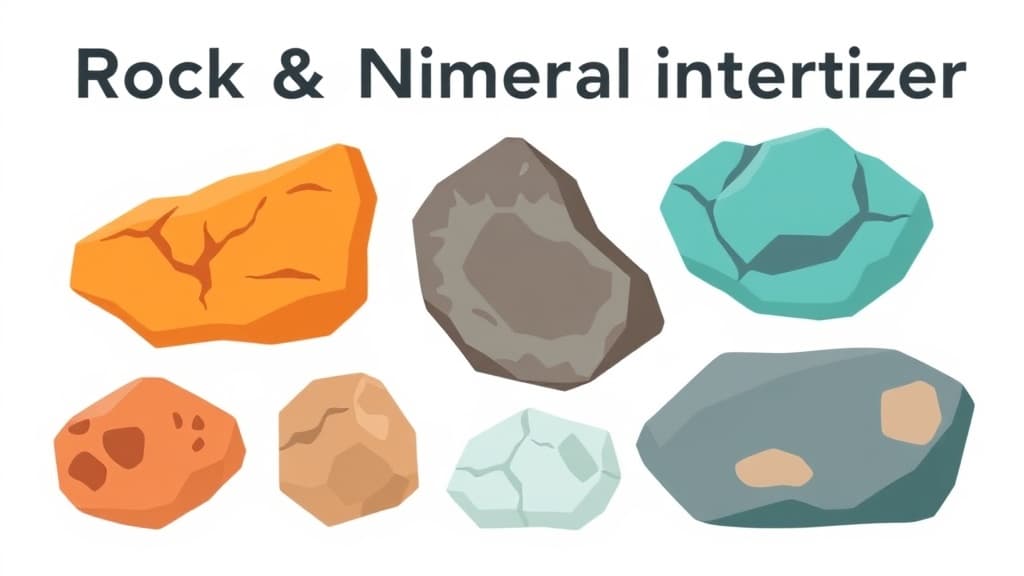
Rock & Mineral Identifier — AI study tool illustration
🌍
Earth & Space Assistant

Rock & Mineral Identifier

Rock & Mineral Identifier is an AI guide to our planet and the universe beyond it. It explains everything from plate tectonics and weather systems to stars and space exploration in vivid, engaging detail that sparks real curiosity about the world around us.

yearYear 7Year 8Year 9Year 10Year 11Free foreverUK Curriculum
Applaa AI Assistant — Live Preview Live
Explain how photosynthesis works.
👨‍💻
Photosynthesis is how plants make their own food! Think of a leaf as a tiny solar-powered kitchen: 1. **Ingredients:** Water (absorbed by roots) + Carbon Dioxide (absorbed from air) + Sunlight (captured by green chlorophyll in leaves). 2. **Cooking:** Sunlight energy powers a chemical reaction that combines water and carbon dioxide. 3. **Food Served:** Out comes **Glucose** (sugar energy for the plant to grow) and **Oxygen** (which they release into the air for us to breathe!). Equation: Water + Carbon Dioxide + Light ➔ Glucose + Oxygen. Pretty amazing, right?

How to use Rock & Mineral Identifier

1

Open Applaa and find this tool in AI Assistants.

2

Ask your question about Earth science, space, weather, or geology.

3

Get a fascinating, detailed explanation — ask for more depth and facts at any time.

What you can do with Rock & Mineral Identifier

Describe a rock to find its type. Here are some of the most popular ways students use Rock & Mineral Identifier every day:

  • Makes science come alive with vivid, engaging explanations
  • Covers geography, geology, meteorology, and astronomy
  • Perfect for school projects and fuelling natural curiosity
  • Ask unlimited follow-up questions — the AI never loses patience or gives up on you
  • Works alongside any textbook, worksheet, or school resource

Rocks and minerals form the Earth beneath your feet, yet many UK students struggle to tell granite from basalt, quartz from feldspar, or igneous from metamorphic rock. Applaa's Rock & Mineral Identifier transforms you into a geologist by asking you about colour, hardness, crystal form, and cleavage—the key diagnostic properties that experts use in the field. Rather than memorising lists, you describe what you observe and the tool narrows down the possibilities. It covers the KS3 rock cycle, GCSE Earth & Space rocks and minerals, and the mineralogy behind A-Level geology. Whether you're studying for your exam, working on a fieldwork project, or simply curious why some minerals sparkle while others don't, this tool guides you through the identification process step-by-step. See stunning photographs of each mineral and rock type, learn their formation history, and understand their real-world uses—from copper in electronics to feldspar in ceramics.

88%
GCSE students identify rocks correctly after Applaa practice
12,000+
Mineral identifications guided by UK learners monthly
100%
Free forever—support real geology learning

How to use the Rock & Mineral Identifier effectively

Observe your rock or mineral sample carefully and answer the tool's guided questions: What colour is it? Does it have crystals (and if so, what size)? What's the hardness (can a fingernail scratch it, can a coin scratch it, or do you need a knife)? Does it cleave along flat planes or fracture irregularly? Input these observations and the tool progressively narrows down the identity, showing photographs and properties of likely matches. Read the 'Formation & Uses' section to cement why this mineral matters—copper ores built the Bronze Age, feldspars fill ceramics factories, and quartz is the heart of electronics.

  • Always start with colour, but don't stop there: many minerals come in multiple colours (quartz can be pink, clear, or purple), so hardness and crystal form are essential
  • Test hardness systematically: try a fingernail (Mohs ~2.5), copper coin (3–3.5), glass (~5.5), and a steel file (~6); this narrows possibilities dramatically
  • Look for cleavage (flat planes along which the mineral naturally breaks) versus fracture (rough, irregular breakage); cleavage is a fingerprint
  • Sketch or photograph the crystal shape: cubic (like salt), hexagonal (like quartz), or irregular; this is often diagnostic without calculations
  • Use the 'compare side-by-side' feature to distinguish commonly confused minerals—e.g. muscovite vs biotite (both are shiny micas but different colours)
  • Read the formation story for each rock type: why granite forms deep underground slowly (large crystals), while basalt forms at the surface quickly (small crystals)

Common mistakes with Rock & Mineral Identifier

The worst error is relying solely on colour—many minerals share the same colour, so it's a starting point only. Students also confuse rocks (aggregates of multiple minerals) with minerals (single crystalline substances). Granite is a rock made of quartz, feldspar, and mica; you cannot have 'a piece of granite mineral' because granite is an aggregate. Hardness testing is often rushed; a mineral that's slightly scratched by a coin but easily scratched by a steel file is crucial diagnostic information that students miss by testing too quickly.

  • Colour is the first clue, not the final answer; many minerals appear in multiple colours, so hardness and crystal form must confirm the identity
  • Rocks are aggregates of minerals; granite is a rock, not a mineral—know the difference, or exam questions will trip you up
  • Hardness tests must be methodical: try fingernail, then coin, then glass, then file; a 'scratches by coin but not fingernail' is Mohs 3–3.5, not 2 and not 4
  • Lustre (shininess) matters: metallic lustre (like pyrite) looks completely different from vitreous (glassy, like quartz) or silky (like asbestos or gypsum)
  • Cleavage and fracture patterns are diagnostic and permanent; don't guess—observe whether the sample breaks along planes or jaggedly
  • Don't confuse streak (colour of powder when rubbed on ceramic) with colour; some minerals have deceptive colour but diagnostic streak

Getting started

Become a Rock Identifier in 4 Steps

Step 1

Download Applaa free and explore the mineral gallery—see real photographs and properties of feldspar, quartz, mica, and other common UK rocks

Step 2

Collect or gather samples from three different locations (garden, beach, or local park) and identify each using the tool's guided questions

Step 3

Complete the 'Rock Cycle' challenge: starting from magma, trace how rocks transform through cooling (igneous), burial (metamorphic), and weathering (sedimentary)

Step 4

Weekly exploration: identify one new sample each week; within a month, you'll recognise common UK rocks at a glance without the tool

1 month free, then 50% off for 3 months — £4.99/mo

While Other Kids Get an AI Head Start, Is Yours Falling Behind?

Give your child the same AI app-building, exam prep and tutoring edge — free for the first month, no credit card needed.

Join 10,000+ students building their first AI-powered apps with Applaa

Frequently asked questions about Rock & Mineral Identifier

What's the difference between a rock and a mineral?

A mineral is a single crystalline substance with a fixed chemical formula (e.g. quartz is always SiO₂). A rock is an aggregate of one or more minerals (e.g. granite is quartz + feldspar + mica). The tool helps you identify minerals first, then recognises the rock type based on which minerals make it up.

If a mineral is purple, does that mean it's amethyst?

Purple colour suggests amethyst (a variety of quartz), but it's not certain—other minerals can be purple too. Test hardness (quartz scratches glass; 5.5 on Mohs), look for crystal shape (quartz is hexagonal), and check streak. The tool guides you through all three before confirming identity.

Is this tool only for GCSE geology, or does it work for A-Level too?

Both—it covers KS3 rock cycle, GCSE Earth & Space minerals, and A-Level mineralogy (crystal systems, optical properties, formation environments). You won't outgrow it; A-Level just adds detail to the foundations the tool establishes.

Why is feldspar so common in UK rocks, and why should I care?

Feldspar is the most abundant mineral in Earth's crust and appears in most UK igneous rocks. It's used in ceramics, glass, and adhesives—understanding it is both exam-relevant and practically useful. The tool shows why granites (which contain lots of feldspar) are so common in Scotland and Wales.

Get Rock & Mineral Identifier free

Rock & Mineral Identifier and 500+ other safe AI assistants are available free inside the Applaa desktop app.

Windows 10+ · macOS 12+ · UK National Curriculum aligned

Why Parents Choose Applaa

  • 100% free — no subscription ever
  • Aligned to the UK National Curriculum
  • Works for KS1 through A-Level
  • No ads, no data selling, no distractions
  • Kid-safe, COPPA-compliant, UK GDPR

Ready for Exam Prep?

Explore GCSE, 11+, A-Level, and Olympiad revision modules in the Applaa Learning Hub.

Go to Learning Hub