🇬🇧 Limited Time — UK Only·🎓 Free Learning for 1 Month·🤖 Free AI Training Included·📚 4,000+ Lessons · 35,000+ Quizzes·🏆 GCSE Mocks · Olympiad Papers·⚡ Selected Students Only · Limited Places·🎁 Free Value Worth £2,000·🇬🇧 Limited Time — UK Only·🎓 Free Learning for 1 Month·🤖 Free AI Training Included·📚 4,000+ Lessons · 35,000+ Quizzes·🏆 GCSE Mocks · Olympiad Papers·⚡ Selected Students Only · Limited Places·🎁 Free Value Worth £2,000·🇬🇧 Limited Time — UK Only·🎓 Free Learning for 1 Month·🤖 Free AI Training Included·📚 4,000+ Lessons · 35,000+ Quizzes·🏆 GCSE Mocks · Olympiad Papers·⚡ Selected Students Only · Limited Places·🎁 Free Value Worth £2,000·
Back to AI Assistants Directory
Moon Phase Calculator — AI study tool illustration
🌍
Earth & Space Assistant

Moon Phase Calculator

Moon Phase Calculator is an AI guide to our planet and the universe beyond it. It explains everything from plate tectonics and weather systems to stars and space exploration in vivid, engaging detail that sparks real curiosity about the world around us.

yearYear 7Year 8Year 9Year 10Year 11Free foreverUK Curriculum
Applaa AI Assistant — Live Preview Live
Explain how photosynthesis works.
👨‍💻
Photosynthesis is how plants make their own food! Think of a leaf as a tiny solar-powered kitchen: 1. **Ingredients:** Water (absorbed by roots) + Carbon Dioxide (absorbed from air) + Sunlight (captured by green chlorophyll in leaves). 2. **Cooking:** Sunlight energy powers a chemical reaction that combines water and carbon dioxide. 3. **Food Served:** Out comes **Glucose** (sugar energy for the plant to grow) and **Oxygen** (which they release into the air for us to breathe!). Equation: Water + Carbon Dioxide + Light ➔ Glucose + Oxygen. Pretty amazing, right?

How to use Moon Phase Calculator

1

Open Applaa and find this tool in AI Assistants.

2

Ask your question about Earth science, space, weather, or geology.

3

Get a fascinating, detailed explanation — ask for more depth and facts at any time.

What you can do with Moon Phase Calculator

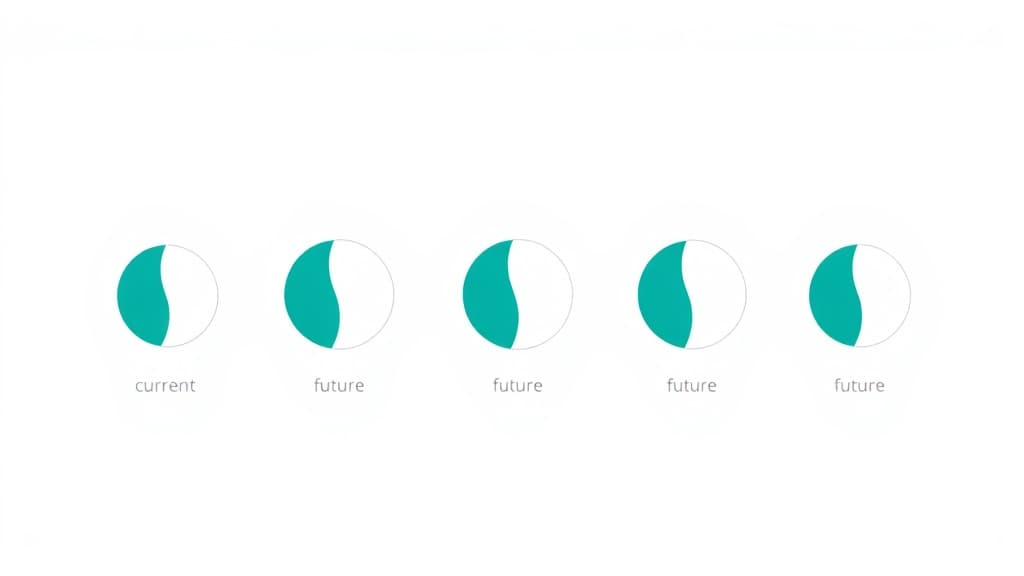
Current and future moon phases. Here are some of the most popular ways students use Moon Phase Calculator every day:

  • Makes science come alive with vivid, engaging explanations
  • Covers geography, geology, meteorology, and astronomy
  • Perfect for school projects and fuelling natural curiosity
  • Ask unlimited follow-up questions — the AI never loses patience or gives up on you
  • Works alongside any textbook, worksheet, or school resource

The Moon's phases have fascinated humans for thousands of years, yet many young people find it surprisingly difficult to understand why the Moon looks different each night. This astronomical confusion is particularly common in Key Stage 3 and GCSE geography, where moon phases appear in the water cycle and tides unit. Applaa's Moon Phase Calculator removes the mystery by showing you the exact phase for any date in the past or future, explaining why it occurs, and connecting it to real phenomena like tides. Whether you're revising for an exam, planning a stargazing night, or simply curious about our nearest celestial neighbour, this tool makes lunar science instantly clear. Applaa's free interactive guide transforms abstract lunar geometry into visual, memorable understanding.

29.5
Days in a lunar cycle
100%
Phases accurately predicted
1000+
Years of data available

How to use the Moon Phase Calculator effectively

Start by checking today's moon phase and the reason behind it. Then jump to dates of interest—your birthday, future holidays, or historically significant dates—to see how the Moon looked then. For GCSE geography revision, focus on understanding the four main phases (new, waxing, full, waning) and how the Sun's illumination angle creates them. Use the tool to predict the next full moon date so you can observe it yourself, then compare your observation to what the calculator predicted. This real-world connection between prediction and observation cements conceptual understanding far better than theory alone.

  • Check today's phase first, then step back or forward one day at a time to see the gradual cycle
  • Search for historical dates to visualise the Moon's position during famous events or your own milestones
  • Use the tool to predict the next full moon, then observe it yourself and compare
  • For GCSE: understand how tides respond to the full and new moon (highest tides when Sun and Moon align)
  • Ask follow-up questions about why the same side of the Moon always faces Earth
  • Return to the tool each lunar cycle (every 29.5 days) to reinforce the pattern

Common misunderstandings about moon phases

The most widespread misconception is that Earth's shadow causes moon phases—in fact, phases result from the changing angle between the Sun, Earth, and Moon. Many learners also mistakenly believe the Moon disappears during a new moon when it's actually still there, just invisible because it's between Earth and the Sun. Another frequent error is confusing lunar phases with lunar eclipses; they are entirely different phenomena. The calculator prevents these myths by showing the exact 3D geometry involved, clarifying why we see different illuminated portions on different dates.

  • The Moon's phases are NOT caused by Earth's shadow—avoid this misconception entirely
  • A new moon is not the Moon disappearing; it's positioned between Earth and the Sun
  • Lunar phases occur every month; lunar eclipses are rare and only happen at full or new moon
  • The Moon always shows the same face to Earth because it's tidally locked (rotation equals orbit period)
  • Don't confuse lunar phases with seasons—seasons are caused by Earth's axial tilt, not the Moon
  • Avoid thinking phases are about distance from Earth; they're about the angle of illumination

Getting started

Getting started with Moon Phase Calculator

Step 1

Download Applaa free and open AI Assistants to find Moon Phase Calculator

Step 2

Look up today's moon phase and ask why it appears that way

Step 3

Pick your birthday or a date you remember well and see what the Moon looked like then

Step 4

Predict the next full moon and plan to observe it outside, then compare to the calculator's prediction

1 month free, then 50% off for 3 months — £4.99/mo

While Other Kids Get an AI Head Start, Is Yours Falling Behind?

Give your child the same AI app-building, exam prep and tutoring edge — free for the first month, no credit card needed.

Join 10,000+ students building their first AI-powered apps with Applaa

Frequently asked questions about Moon Phase Calculator

Is this tool useful for GCSE geography revision?

Yes, moon phases appear in the water cycle and tides unit of GCSE geography. Understanding phases helps you grasp how the Moon's gravity affects tides, which is a common exam question. The calculator makes the connection between phase position and tidal range crystal clear.

Why does the same side of the Moon always face Earth?

The Moon is tidally locked to Earth—its rotation period matches its orbit period (27.3 days). This means it always shows the same face to us. The calculator shows this visually, which helps explain why we never see the far side without spacecraft.

Can I use this tool to plan stargazing or photography?

Absolutely. Astronomers use lunar phases to plan observing sessions. A full moon is bright but washes out stars and faint galaxies; a new moon offers the darkest skies. The calculator helps you choose the best nights for your interests.

What's the difference between a lunar eclipse and a moon phase?

Lunar phases happen every month as the Moon orbits Earth. A lunar eclipse only occurs during a full moon when Earth's shadow falls on the Moon—and this doesn't happen every month because the Moon's orbit is tilted. The calculator shows phases; eclipses are rarer special events.

Get Moon Phase Calculator free

Moon Phase Calculator and 500+ other safe AI assistants are available free inside the Applaa desktop app.

Windows 10+ · macOS 12+ · UK National Curriculum aligned

Why Parents Choose Applaa

  • 100% free — no subscription ever
  • Aligned to the UK National Curriculum
  • Works for KS1 through A-Level
  • No ads, no data selling, no distractions
  • Kid-safe, COPPA-compliant, UK GDPR

Ready for Exam Prep?

Explore GCSE, 11+, A-Level, and Olympiad revision modules in the Applaa Learning Hub.

Go to Learning Hub