Do I need expensive equipment to understand lighting design?
No—Applaa's virtual tools teach principles without requiring real fixtures. Understanding light's behaviour is the foundation; equipment comes later.
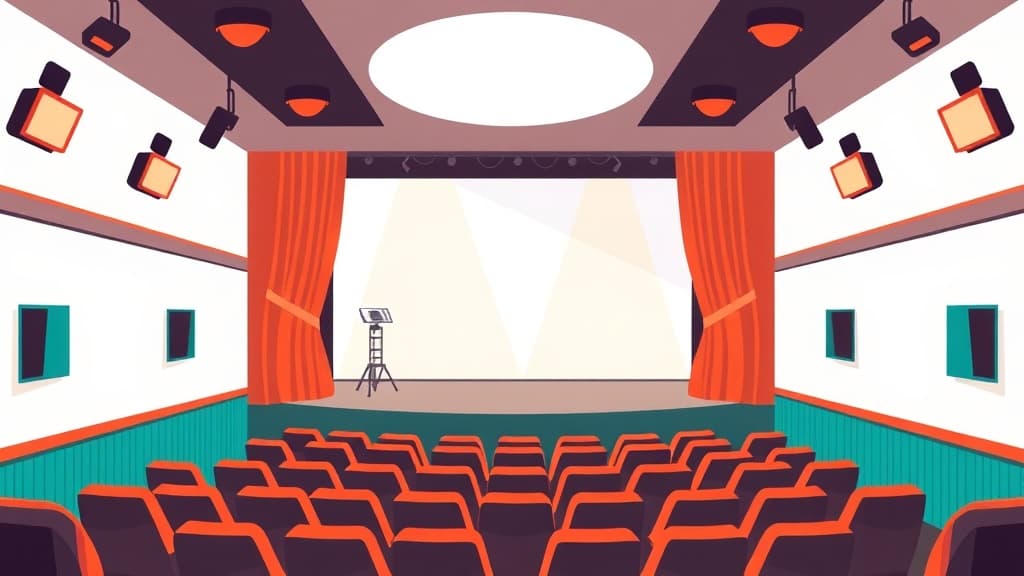
Theater Lighting Design is a creative drama and performance mentor that develops your child's theatrical skills and confidence. From finding the perfect audition piece to understanding stagecraft and scriptwriting, it provides the expert guidance that builds real performance ability.
Open Applaa and find this tool in AI Assistants.
Describe your role, project, or performance challenge in detail.
Get tailored scripts, monologues, technique tips, or stage direction advice ready to use.
Colors and shadows for plays. Here are some of the most popular ways students use Theater Lighting Design every day:
Theater Lighting Design teaches UK students how light shapes mood, guides audience focus, and transforms theatrical spaces into compelling worlds. Understanding lighting is essential for GCSE Drama coursework (especially design portfolio), A-Level Drama practical work, and any student interested in technical theater. Most young performers and designers underestimate lighting's psychological power—yet it's often the difference between an amateur and professional production. Applaa's Theater Lighting Design tool explores colour psychology (cool blues for melancholy, warm ambers for intimacy), gel types, fixture positioning, intensity control, and cueing systems. You'll analyse lighting from famous productions, learn industry-standard terminology, and practise designing lighting plots for scene genres (comedy, tragedy, horror, romance). Interactive tools let you experiment with light colour and angle in a virtual stage space, seeing immediate visual feedback. Whether you're designing for your school production, coursework, or exploring technical theater careers, this tool demystifies a complex, creative craft.
Start by understanding colour psychology: cool tones (blue, green, purple) suggest distance, mystery, or sadness; warm tones (amber, red, orange) create intimacy and urgency. Study industry fixture types (Fresnels, profiles, PARs) and their unique properties. Analyse lighting plots from published productions—notice how key light, back light, and fill light sculpt actors' faces and define space. Use Applaa's virtual stage to experiment: position lights, adjust colour gels, and observe how small changes dramatically shift mood. Create mood boards linking scenes to specific lighting schemes. Sketch lighting plots for scenes you know, then compare your choices to professional designs. Practise writing cue sheets (precise timing and intensity changes) to develop precision.
Inexperienced designers often overlight scenes, drowning subtle mood in excessive brightness. Another frequent error is ignoring colour temperature consistency—mixing warm and cool tones chaotically instead of intentionally. Many young designers also neglect actor visibility, prioritising mood over the fundamental need for audiences to see faces and expressions clearly. Some designs lack hierarchy, treating all elements equally bright instead of guiding focus strategically. Beginners sometimes forget that lighting must support the narrative and emotional arc; arbitrary colour choices distract rather than enhance. Finally, poor cue timing and lack of precision undermines even solid design vision during live performance.
Getting started
Download Applaa free and explore colour psychology fundamentals
Study 3 professional lighting plots from productions in genres you love
Use the virtual stage to design lighting for a simple comedic scene
Create a complete lighting plot with mood board and detailed cue sheet
Give your child the same AI app-building, exam prep and tutoring edge — free for the first month, no credit card needed.
Join 10,000+ students building their first AI-powered apps with Applaa
No—Applaa's virtual tools teach principles without requiring real fixtures. Understanding light's behaviour is the foundation; equipment comes later.
Warm tones (ambers, reds) create intimacy and danger; cool tones (blues, greens) suggest distance, mystery, or sadness. Applaa's colour psychology guide explores this deeply.
Very—your design portfolio must demonstrate understanding of how light shapes mood and supports narrative. Strong lighting design can elevate a good production to excellent.
Yes—film, photography, art installation, and event design all use identical colour and positioning principles. Lighting knowledge transfers across creative disciplines.
Theater Lighting Design and 500+ other safe AI assistants are available free inside the Applaa desktop app.
Explore GCSE, 11+, A-Level, and Olympiad revision modules in the Applaa Learning Hub.
Go to Learning Hub