I can't draw well—will Costume Design Sketcher still help?
Yes—the tool provides figure templates and sketching guides, so you focus on design thinking rather than artistic technique. Clarity of design concept matters more than drawing skill.
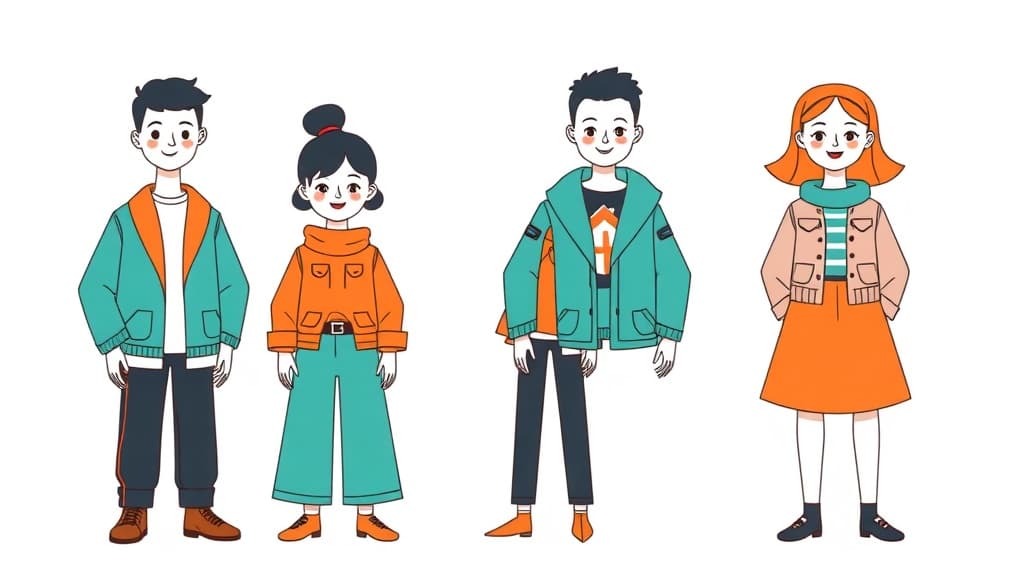
Costume Design Sketcher is a creative drama and performance mentor that develops your child's theatrical skills and confidence. From finding the perfect audition piece to understanding stagecraft and scriptwriting, it provides the expert guidance that builds real performance ability.
Open Applaa and find this tool in AI Assistants.
Describe your role, project, or performance challenge in detail.
Get tailored scripts, monologues, technique tips, or stage direction advice ready to use.
Plan outfits for characters. Here are some of the most popular ways students use Costume Design Sketcher every day:
Costume Design Sketcher empowers UK drama students to conceptualise, sketch, and develop character outfits from concept through final realisation. Whether you're designing costumes for your school production, creating a GCSE Drama design portfolio, or exploring career paths in costume design, this tool transforms vague character ideas into detailed, wearable designs. Many young designers struggle with how to translate character psychology into visual form or how to sketch convincingly without formal art training. Applaa's Costume Design Sketcher provides anatomically-accurate figure templates, fabric swatches, colour palettes, and design annotation tools. You'll explore how silhouette, colour, texture, and historical/cultural context communicate character instantly. Learn from professional costume designers' case studies, then apply those principles to your own creations. The tool demystifies the design process, turning abstract character understanding into concrete visual language that performers and audiences respond to emotionally.
Begin by deeply understanding your character: their age, social status, profession, emotional journey, and historical period. Gather visual research—Pinterest boards, museum photos, film stills—showing silhouettes and details that feel right. Sketch multiple iterations on provided figure templates; don't aim for photorealism, focus on character clarity. Annotate each sketch with fabric choices, colour meanings, and design rationale. Consider movement and practical requirements: can your actor sit, dance, fight in this outfit? Layer costumes if the character's circumstances change during the play. Test colour combinations against lighting schemes. Present final designs with front, back, and detail views, plus a fabric and colour swatch board justifying your choices.
Inexperienced designers often create costumes based on personal taste rather than character needs, resulting in designs that contradict the character's world. Another frequent error is neglecting the relationship between costume, lighting, and set design—costumes must integrate with the overall visual environment. Many young designers also ignore practical constraints (movement, budget, available fabrics), creating beautiful designs that actors can't actually perform in. Some focus exclusively on elaborate decoration rather than silhouette and line, which communicate character instantly. Beginners sometimes neglect research, inventing details that feel inauthentic. Finally, poor annotation and presentation—even brilliant designs are unmarked, leaving examiners guessing at intention.
Getting started
Download Applaa free and select a character to design for
Create a research mood board exploring character's world and aesthetics
Sketch 3–5 costume iterations using provided figure templates
Develop final design with front/back views, fabric swatches, and detailed justification
Give your child the same AI app-building, exam prep and tutoring edge — free for the first month, no credit card needed.
Join 10,000+ students building their first AI-powered apps with Applaa
Yes—the tool provides figure templates and sketching guides, so you focus on design thinking rather than artistic technique. Clarity of design concept matters more than drawing skill.
Present multiple views (front, back, detail), annotated with fabric, colour, and character rationale. Photographs of paper sketches or digital designs are equally valid.
Modern clothing is never boring—the challenge is making choices that reflect character psychology. A carefully chosen hoodie communicates as much as an elaborate period gown.
Significantly—professional designers work within constraints. For school productions, note available resources (fabrics, budget, time) and adapt designs accordingly. That's realistic design thinking.
Costume Design Sketcher and 500+ other safe AI assistants are available free inside the Applaa desktop app.
Explore GCSE, 11+, A-Level, and Olympiad revision modules in the Applaa Learning Hub.
Go to Learning Hub