Is stage combat dangerous?
Not when performed properly. Stage combat uses technique and illusion, not real force. Injuries occur when performers skip training, neglect communication, or ignore safety protocols.
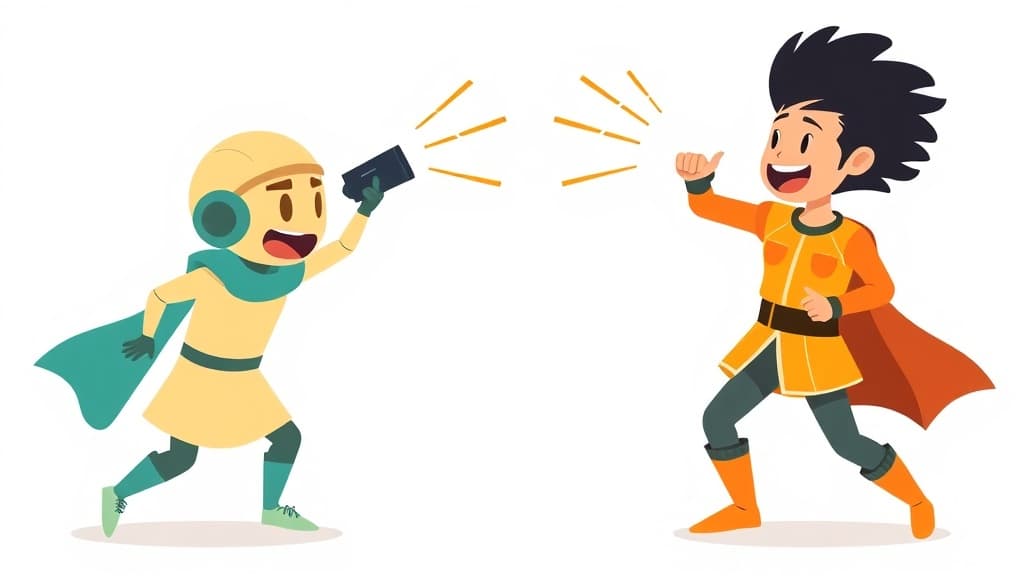
Stage Combat Basics is a creative drama and performance mentor that develops your child's theatrical skills and confidence. From finding the perfect audition piece to understanding stagecraft and scriptwriting, it provides the expert guidance that builds real performance ability.
Open Applaa and find this tool in AI Assistants.
Describe your role, project, or performance challenge in detail.
Get tailored scripts, monologues, technique tips, or stage direction advice ready to use.
Safety and illusion in fights. Here are some of the most popular ways students use Stage Combat Basics every day:
Stage Combat Basics teaches UK drama students the choreography, safety protocols, and illusion techniques required to stage convincing fight scenes, sword work, and combat sequences. Whether you're performing in a Shakespeare production, creating GCSE Drama coursework involving conflict, or exploring technical performance skills, stage combat combines physical theatre with rigorous safety discipline. Many young performers assume they can 'fake' violence, risking genuine injury to themselves and scene partners. Applaa's Stage Combat Basics introduces industry-standard techniques: how to choreograph safe strikes that look devastating, how to use sound design and positioning to amplify illusion, and how to protect vulnerable areas while maintaining performance integrity. You'll study slow-motion video breakdowns of professional fight choreography, learn body mechanics that prevent injury, and understand the psychology of stage violence (when to use it, how to pace it, when restraint is more powerful). This tool transforms fight scenes from awkward fumbling into compelling, safe, athletic performance.
Begin with foundational principles: safety always supersedes spectacle, communication with your scene partner is essential, and speed equals safety (slow-motion work reveals sloppy technique). Study positioning and distance—never strike with full force; let your partner's reaction and sound design create impact. Master fundamental techniques: slaps (hand never leaves partner's control), punches (aim past the face, partner 'takes' the contact), sword work (blade angles and momentum control). Practise moves repeatedly at different speeds before performing them. Coordinate with your partner between every rehearsal—check in on comfort, pressure points, and any emerging injuries. Watch professional fight choreography and analyse how positioning, camera angles, and sound design create illusion without actual impact.
Beginners often prioritise spectacle over safety, attempting advanced techniques before mastering fundamentals. Another dangerous error is assuming stage combat works without rehearsal; real violence is always preceded by weeks of coordinated practice. Many young performers also neglect communication, failing to establish safety signals or report discomfort to partners. Some create overly complex choreography that looks flashy but feels chaotic; simple, clean moves always read better. Another mistake is ignoring sound design—the audio punch is often more impactful than the physical action. Beginners sometimes fail to account for adrenaline during performance, executing moves faster than rehearsed and risking accidents. Finally, ego and showing off (trying to make moves more impressive than choreographed) endangers everyone.
Getting started
Download Applaa free and study the safety protocols and communication guidelines
Master foundational techniques: slaps, punches, and falling safely
Choreograph a simple 30-second fight sequence with a partner
Rehearse intensively, building speed and polish while maintaining safety discipline
Give your child the same AI app-building, exam prep and tutoring edge — free for the first month, no credit card needed.
Join 10,000+ students building their first AI-powered apps with Applaa
Not when performed properly. Stage combat uses technique and illusion, not real force. Injuries occur when performers skip training, neglect communication, or ignore safety protocols.
Ideally, yes—formal stage combat qualifications exist (British Academy of Dramatic Combat, etc.). For school productions, trained teaching is essential; Applaa provides foundational knowledge but can't replace professional instruction.
No—stage combat is theatrical illusion, not functional fighting. For self-defence, pursue formal martial arts or self-defence courses with qualified instructors.
Size differences require thoughtful choreography. Position yourself strategically, adjust angles, and communicate extensively. Professional fight choreographers adapt work constantly.
Stage Combat Basics and 500+ other safe AI assistants are available free inside the Applaa desktop app.
Explore GCSE, 11+, A-Level, and Olympiad revision modules in the Applaa Learning Hub.
Go to Learning Hub