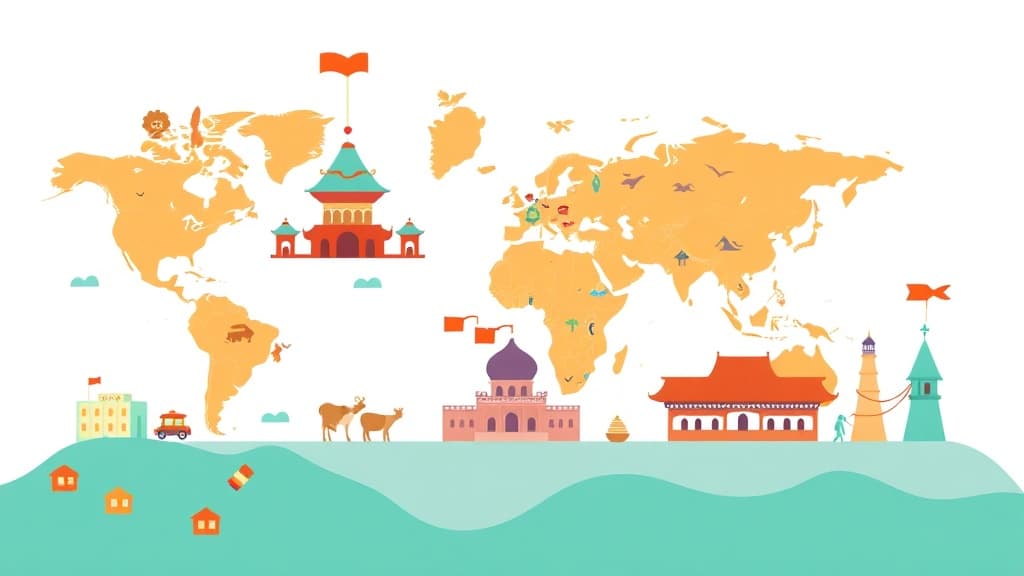
World Cultures Explorer explores the big questions about our world — from climate change and sustainability to global societies and human rights. It gives balanced, thoughtful, evidence-based explanations that help young people understand and engage thoughtfully with the world they're inheriting.
Help me understand this topic for my school revision.
👨💻
I'd love to help! Let's break this down into bite-sized pieces.
First, tell me what year group you are in and if you have any homework questions. I will explain it step-by-step with real-world examples, and we can do a quick quiz at the end to make sure it makes perfect sense!
How to use World Cultures Explorer
1
Open Applaa and find this tool in AI Assistants.
2
Ask your question about the environment, society, sustainability, or a global issue.
3
Get a clear, balanced explanation with real evidence, context, and multiple perspectives.
What you can do with World Cultures Explorer
Traditions, languages, and customs. Here are some of the most popular ways students use World Cultures Explorer every day:
Builds genuine understanding of the world's biggest challenges
Covers geography, environmental science, and global citizenship
Develops critical thinking and an informed worldview
Ask unlimited follow-up questions — the AI never loses patience or gives up on you
Works alongside any textbook, worksheet, or school resource
The world's 195 countries are home to thousands of unique cultures, languages, traditions, and ways of life—yet many UK students experience limited exposure to this diversity. The World Cultures Explorer is an interactive journey through traditions, languages, festivals, food, art, and social customs across continents, designed to build genuine cultural understanding and respect. Whether you're studying KS3 geography, GCSE languages, or A-Level sociology, this tool enriches your perspective and fuels curiosity about people different from yourself. Applaa's Explorer moves beyond stereotypes: you'll hear from real people sharing their stories, learn the history behind traditions, and discover surprising connections between cultures. You can explore languages through audio pronunciation guides, follow a recipe from another culture, read about festivals celebrated worldwide, and reflect on your own cultural identity. By using the World Cultures Explorer with Applaa, you build empathy, combat prejudice, and gain a richer understanding of our shared humanity.
180+
Countries with full cultural profiles and living voices
10,000+
UK students exploring other cultures monthly on Applaa
100%
Content created or reviewed by cultural insiders for authenticity
How to use the World Cultures Explorer effectively
Choose a region or culture that interests you—browse by continent, country, or topic (e.g. 'Festivals', 'Food', 'Languages'). Read the cultural profile to understand history, values, and social norms. Listen to pronunciation guides for key words in that language and learn simple greetings. Explore 'Daily Life' features showing school routines, family structures, or celebrations. Watch short clips from real people sharing their experiences and perspectives. Complete the 'Reflection' section to consider how this culture compares to your own. Challenge yourself to try a recipe, watch a traditional dance, or learn a new skill from another culture.
Start with a culture or country you're curious about; explore via region, theme, or your family heritage
Read the historical and social context to understand why traditions matter, not just what they are
Use pronunciation audio guides and learn greetings to engage with languages respectfully and practically
Watch 'Voices' videos where real people (not actors) share their daily lives, dreams, and perspectives
Try a hands-on activity: cook a traditional dish, learn a few phrases, or explore an art form
Reflect on differences and similarities between this culture and your own to deepen empathy
Common mistakes when exploring other cultures
Many students reduce cultures to stereotypes—e.g. assuming all Asian people follow the same traditions or that Africa is monolithic. The guide combats this by highlighting diversity within cultures and showing how individuals blend tradition with modernity. Another mistake is 'exoticizing'—treating other cultures as fascinating but distant, not recognizing shared humanity. Some people also appropriate without understanding (wearing traditional clothing as a costume without knowing its significance). The Explorer teaches respectful engagement: genuine curiosity, asking permission, acknowledging sources, and recognizing both differences and similarities.
Cultures are not monolithic: within every country and tradition, individuals and subgroups have diverse beliefs
Avoid exoticizing: respect traditions as integral to people's lives, not entertainment or museum pieces
Respect vs. appropriation: learn about traditions with humility; if you participate, ask permission and acknowledge meaning
Traditions evolve: modern people navigate tradition and change; avoid freezing cultures in a 'timeless' past
Language matters: learn correct names for places and groups; mispronouncing someone's home or identity is disrespectful
Listen to real voices: prioritise accounts from people within cultures over external narrators
Getting started
Explore world cultures in 4 steps
Step 1
Download Applaa free and navigate to Environment & Society → World Cultures Explorer
Step 2
Choose a culture linked to your family, a friend, or a place you want to visit and explore its profile
Step 3
Listen to pronunciation guides, watch 'Voices' videos from real people, and learn one tradition or skill
Step 4
Share what you learned with a friend or classmate and encourage them to explore a culture too
1 month free, then 50% off for 3 months — £4.99/mo
While Other Kids Get an AI Head Start, Is Yours Falling Behind?
Give your child the same AI app-building, exam prep and tutoring edge — free for the first month, no credit card needed.
Join 10,000+ students building their first AI-powered apps with Applaa
Frequently asked questions about World Cultures Explorer
How can I explore cultures respectfully without being offensive?
The Explorer guides you: read the history and context, listen to real voices, and reflect on your own assumptions. Ask questions respectfully, acknowledge what you don't know, and avoid stereotyping. If you participate in a tradition (e.g. wearing traditional dress), do so with permission and understanding of its meaning.
Is this relevant to GCSE languages or geography?
Very much. The pronunciation guides, dialects, and cultural contexts deepen language learning. For geography, understanding culture, settlement patterns, and social structures directly supports exam answers and projects on human geography and development.
I don't have a cultural background to explore—can I still use the Explorer?
Absolutely. Everyone benefits from learning about cultures different from their own. The Explorer is designed for curiosity and empathy, not for 'finding your roots.' Use it to challenge your own assumptions, learn about your friends' backgrounds, or explore places you might visit.
Does the Explorer show difficult parts of cultures—like gender inequality or conflict?
Yes. The guide presents cultures honestly: alongside beautiful traditions, it acknowledges challenges like discrimination or violence. This honesty is more respectful than sanitising cultures. Real people navigate these complexities daily, and understanding them builds more mature, empathetic engagement.