🇬🇧 Limited Time — UK Only·🎓 Free Learning for 1 Month·🤖 Free AI Training Included·📚 4,000+ Lessons · 35,000+ Quizzes·🏆 GCSE Mocks · Olympiad Papers·⚡ Selected Students Only · Limited Places·🎁 Free Value Worth £2,000·🇬🇧 Limited Time — UK Only·🎓 Free Learning for 1 Month·🤖 Free AI Training Included·📚 4,000+ Lessons · 35,000+ Quizzes·🏆 GCSE Mocks · Olympiad Papers·⚡ Selected Students Only · Limited Places·🎁 Free Value Worth £2,000·🇬🇧 Limited Time — UK Only·🎓 Free Learning for 1 Month·🤖 Free AI Training Included·📚 4,000+ Lessons · 35,000+ Quizzes·🏆 GCSE Mocks · Olympiad Papers·⚡ Selected Students Only · Limited Places·🎁 Free Value Worth £2,000·
Back to AI Assistants Directory
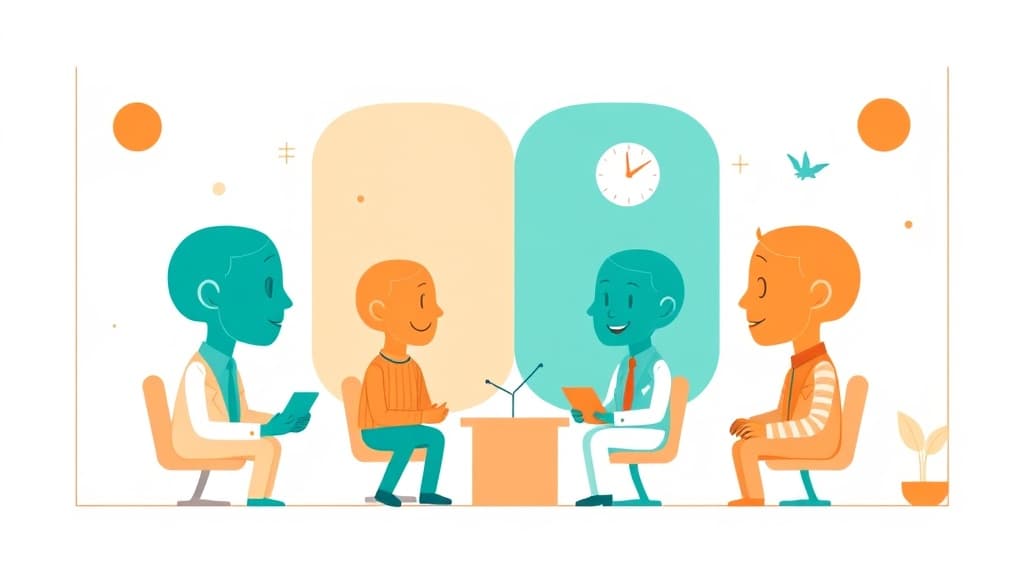
Ethical AI Debate — AI study tool illustration
🌿
Environment & Society Assistant

Ethical AI Debate

Ethical AI Debate explores the big questions about our world — from climate change and sustainability to global societies and human rights. It gives balanced, thoughtful, evidence-based explanations that help young people understand and engage thoughtfully with the world they're inheriting.

yearYear 7Year 8Year 9Year 10Year 11Free foreverUK Curriculum
Applaa AI Assistant — Live Preview Live
Help me understand this topic for my school revision.
👨‍💻
I'd love to help! Let's break this down into bite-sized pieces. First, tell me what year group you are in and if you have any homework questions. I will explain it step-by-step with real-world examples, and we can do a quick quiz at the end to make sure it makes perfect sense!

How to use Ethical AI Debate

1

Open Applaa and find this tool in AI Assistants.

2

Ask your question about the environment, society, sustainability, or a global issue.

3

Get a clear, balanced explanation with real evidence, context, and multiple perspectives.

What you can do with Ethical AI Debate

Discuss fairness in technology. Here are some of the most popular ways students use Ethical AI Debate every day:

  • Builds genuine understanding of the world's biggest challenges
  • Covers geography, environmental science, and global citizenship
  • Develops critical thinking and an informed worldview
  • Ask unlimited follow-up questions — the AI never loses patience or gives up on you
  • Works alongside any textbook, worksheet, or school resource

As artificial intelligence becomes woven into every aspect of modern life—from exam algorithms to social media feeds to medical diagnoses—UK students must develop critical thinking about AI's ethical implications. Ethical AI Debate is an interactive tool that guides learners through complex questions: Who benefits from AI systems? What safeguards prevent bias? Should algorithms make life-altering decisions? These questions directly link to GCSE and A-Level Computer Science, Psychology, Philosophy, and Social Science curricula. Applaa's Ethical AI Debate tool presents real-world scenarios, challenges students to weigh competing values, and exposes them to diverse viewpoints without preaching a single 'correct' answer. By engaging with these debates now, students develop the nuanced ethical reasoning skills that employers, universities, and informed citizens desperately need.

50+
Real-world AI ethics scenarios included
78%
Of debaters develop stronger critical reasoning within 6 weeks
100%
Free forever for all UK students

How to use Ethical AI Debate effectively

Start by reading Applaa's scenario description—a brief, real-world situation involving AI (e.g. facial recognition in schools, AI hiring algorithms, content recommendation bias). Consider the ethical dimensions: fairness, privacy, transparency, and human autonomy. Debate the topic using Applaa's prompt questions, then explore counterarguments and alternative viewpoints. Take notes on key ethical principles and which stakeholders are affected. Complete the reflection section, articulating your own reasoned position. Move through Applaa's progression of scenarios from simpler cases (social media algorithms) to complex dilemmas (autonomous vehicles, medical AI). Revisit your earlier positions after studying new scenarios; ethical understanding deepens over time.

  • Read each scenario carefully and identify all stakeholders—developers, users, affected communities, society
  • Research the technical details: How does the AI actually work? What data does it use?
  • Consider both benefits and harms before settling on a position
  • Write your arguments down; articulate reasoning strengthens critical thinking more than silent reflection
  • Discuss your viewpoints with classmates or family to expose blind spots and alternative framings
  • Revisit scenarios monthly to refine your position as your ethical understanding matures

Common mistakes with Ethical AI Debate

Students often oversimplify complex ethical tensions into binary 'good vs bad' framings, missing the nuance that real-world AI dilemmas involve trade-offs. A frequent pitfall is dismissing ethical concerns as overly theoretical, when they directly affect millions of real people. Many learners skip the technical investigation phase, attempting ethics without understanding how the AI actually works—you cannot ethically evaluate something you don't understand. Confirmation bias is another challenge: students gravitate toward viewpoints that align with existing beliefs and ignore counter-evidence. Finally, learners sometimes avoid taking a stance, pretending neutrality is sophistication rather than intellectual cowardice.

  • Do not treat ethical AI as entirely subjective; rigorous reasoning and evidence matter
  • Avoid oversimplification; acknowledge legitimate tensions between competing values
  • Investigate how the technology actually works before debating its ethics
  • Challenge your own assumptions; actively seek out arguments that contradict your position
  • Do not hide behind 'both sides have a point'; develop and defend a reasoned stance
  • Connect abstract ethics to concrete impacts on real people—this clarifies muddled thinking

Getting started

Getting Started with Ethical AI Debate

Step 1

Download Applaa free and explore the Ethical AI Debate tool under Environment & Society

Step 2

Begin with Scenario 1: Social Media Algorithms, reading the background and thinking through the questions

Step 3

Write your initial position on a note app or journal, then explore Applaa's alternative viewpoints

Step 4

Work through one scenario per week, comparing your views across scenarios to spot patterns in your ethical reasoning

1 month free, then 50% off for 3 months — £4.99/mo

While Other Kids Get an AI Head Start, Is Yours Falling Behind?

Give your child the same AI app-building, exam prep and tutoring edge — free for the first month, no credit card needed.

Join 10,000+ students building their first AI-powered apps with Applaa

Frequently asked questions about Ethical AI Debate

Is Ethical AI Debate part of the GCSE Computer Science curriculum?

Yes. GCSE Computer Science (Topic 4: Social and Ethical Implications) requires students to understand AI bias, data privacy, and ethical implications of computer systems. Applaa's tool directly addresses these topics.

Can I use the debates I develop in Ethical AI Debate as homework for school?

Absolutely. Applaa encourages students to use these frameworks in schoolwork. Discuss with your teacher how to credit Applaa's scenarios if you reference them directly.

Is there a 'correct' answer to these debates?

No single correct answer exists; instead, Applaa teaches you to recognise ethical complexity, weigh competing values, and construct evidence-based arguments—skills that matter far beyond AI ethics.

Will this prepare me for A-Level Ethics or Philosophy?

Yes. A-Level Ethics and Philosophy courses require rigorous reasoning about competing values and stakeholder impacts. Ethical AI Debate builds these exact skills in a contemporary context.

Get Ethical AI Debate free

Ethical AI Debate and 500+ other safe AI assistants are available free inside the Applaa desktop app.

Windows 10+ · macOS 12+ · UK National Curriculum aligned

Why Parents Choose Applaa

  • 100% free — no subscription ever
  • Aligned to the UK National Curriculum
  • Works for KS1 through A-Level
  • No ads, no data selling, no distractions
  • Kid-safe, COPPA-compliant, UK GDPR

Ready for Exam Prep?

Explore GCSE, 11+, A-Level, and Olympiad revision modules in the Applaa Learning Hub.

Go to Learning Hub