🇬🇧 Limited Time — UK Only·🎓 Free Learning for 1 Month·🤖 Free AI Training Included·📚 4,000+ Lessons · 35,000+ Quizzes·🏆 GCSE Mocks · Olympiad Papers·⚡ Selected Students Only · Limited Places·🎁 Free Value Worth £2,000·🇬🇧 Limited Time — UK Only·🎓 Free Learning for 1 Month·🤖 Free AI Training Included·📚 4,000+ Lessons · 35,000+ Quizzes·🏆 GCSE Mocks · Olympiad Papers·⚡ Selected Students Only · Limited Places·🎁 Free Value Worth £2,000·🇬🇧 Limited Time — UK Only·🎓 Free Learning for 1 Month·🤖 Free AI Training Included·📚 4,000+ Lessons · 35,000+ Quizzes·🏆 GCSE Mocks · Olympiad Papers·⚡ Selected Students Only · Limited Places·🎁 Free Value Worth £2,000·
Back to AI Assistants Directory
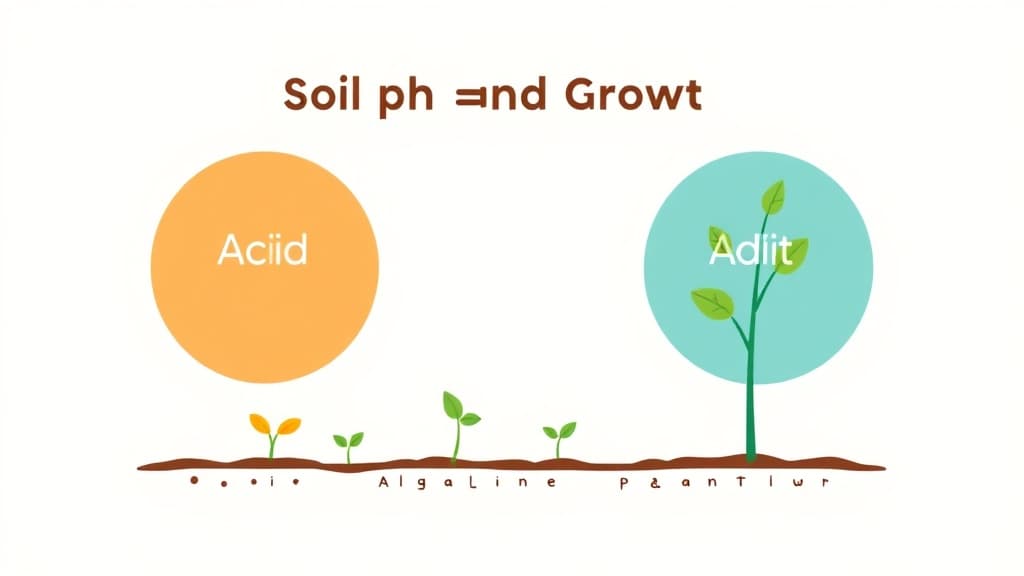
Soil pH and Growth — AI study tool illustration
🌿
Environment & Society Assistant

Soil pH and Growth

Soil pH and Growth explores the big questions about our world — from climate change and sustainability to global societies and human rights. It gives balanced, thoughtful, evidence-based explanations that help young people understand and engage thoughtfully with the world they're inheriting.

yearYear 7Year 8Year 9Year 10Year 11Free foreverUK Curriculum
Applaa AI Assistant — Live Preview Live
Help me understand this topic for my school revision.
👨‍💻
I'd love to help! Let's break this down into bite-sized pieces. First, tell me what year group you are in and if you have any homework questions. I will explain it step-by-step with real-world examples, and we can do a quick quiz at the end to make sure it makes perfect sense!

How to use Soil pH and Growth

1

Open Applaa and find this tool in AI Assistants.

2

Ask your question about the environment, society, sustainability, or a global issue.

3

Get a clear, balanced explanation with real evidence, context, and multiple perspectives.

What you can do with Soil pH and Growth

Acid vs Alkaline planting. Here are some of the most popular ways students use Soil pH and Growth every day:

  • Builds genuine understanding of the world's biggest challenges
  • Covers geography, environmental science, and global citizenship
  • Develops critical thinking and an informed worldview
  • Ask unlimited follow-up questions — the AI never loses patience or gives up on you
  • Works alongside any textbook, worksheet, or school resource

Soil isn't just dirt—it's a complex ecosystem that directly determines what plants can grow, which feeds animals, which feeds us. Understanding soil pH, nutrient content, and soil ecology is fundamental to GCSE and A-Level Biology, Chemistry, and Environmental Science. Yet many students treat soil as a passive growing medium without grasping that pH profoundly shapes which species thrive in which regions, and that soil management is a key lever in sustainable agriculture and environmental restoration. Soil pH and Growth is an interactive tool that lets students experiment with different soil conditions (acidic, neutral, alkaline), observe how pH affects plant growth and nutrient availability, and explore which plants naturally thrive in different soil types across the UK and globally. By building virtual gardens and testing hypotheses about soil chemistry and plant ecology, learners develop systems thinking and grasp why a Scottish peatland looks different from a Midlands clay farm—the soil beneath is doing the work.

50+
Plant species and soil condition combinations to explore
87%
Improve understanding of soil chemistry and plant ecology
100%
Free forever for UK students

How to use Soil pH and Growth effectively

Start by understanding the pH scale (0–14, with 7 being neutral). Read Applaa's chemistry explanation: acidic soils (pH 0–7) have abundant hydrogen ions, affecting nutrient solubility; alkaline soils (pH 7–14) lock up certain nutrients differently. Begin with a simple experiment: select a target plant (e.g. blueberries, which need acidic soil) and adjust the virtual soil pH from 4 to 8. Observe plant growth and nutrient availability at each pH level. Document observations. Then experiment with different plant-soil combinations (e.g. heathers in acidic soils, lilacs in alkaline soils). Use Applaa's lab analysis to measure soil nutrients (nitrogen, phosphorus, potassium) and correlate pH with availability. Research real landscapes matching the soil types you create; explore photos of acid-loving Scottish moorlands versus chalk downs in southern England. Connect the abstract pH scale to tangible regional ecosystems.

  • Understand that pH affects nutrient solubility; each nutrient is available across different pH ranges
  • Test multiple plants across the full pH range to see which thrive where and which fail
  • Use Applaa's lab analysis to measure nutrient availability, not just plant height
  • Research real UK landscapes with different soil types and observe plants that naturally occur there
  • Consider practical gardening applications: why do certain plants struggle in your family's garden?
  • Explore how farmers manage soil pH through lime application or sulphur amendment

Common mistakes with Soil pH and Growth

Many students assume soil pH is the only factor determining plant growth, ignoring water availability, light, and nutrient quantity. Another pitfall is confusing correlation with causation; students observe that acidic soils and blueberries correlate but don't grasp that pH affects nutrient solubility and bioavailability, the mechanistic driver. Learners often overlook the wider ecological picture—certain plants thrive in acidic soils because they've evolved with associated fungi and bacteria; pH alone doesn't explain everything. Some students fail to connect virtual lab experiments to real-world soil science and agriculture. Finally, many underestimate the challenge of soil chemistry; pH management requires understanding chemistry and microbiology, not just gardening intuition.

  • Do not reduce plant growth to pH alone; water, light, and nutrients all matter
  • Understand mechanism, not just correlation; why does pH affect plant growth?
  • Recognise that soil ecosystems include fungi, bacteria, and invertebrates, not just chemical elements
  • Connect lab experiments to real landscapes; observe actual acid-loving and alkaline-loving plant communities
  • Do not assume gardening intuition replaces chemistry; soil science requires quantitative understanding
  • Use Applaa's data to build and test hypotheses; let evidence guide your understanding

Getting started

Getting Started with Soil pH and Growth

Step 1

Download Applaa free and open Soil pH and Growth under Environment & Society

Step 2

Complete the tutorial explaining the pH scale, nutrient solubility, and how pH affects plant growth

Step 3

Design a virtual experiment: select a plant and test its growth across the full pH range (4–8), documenting observations

Step 4

Explore real UK ecosystems with different soil types, identifying which plants naturally thrive, and connect observations to pH and chemistry

1 month free, then 50% off for 3 months — £4.99/mo

While Other Kids Get an AI Head Start, Is Yours Falling Behind?

Give your child the same AI app-building, exam prep and tutoring edge — free for the first month, no credit card needed.

Join 10,000+ students building their first AI-powered apps with Applaa

Frequently asked questions about Soil pH and Growth

Is Soil pH and Growth linked to GCSE Biology's plant nutrition topic?

Yes. GCSE Biology requires understanding plant nutrition and mineral ion uptake. Applaa's tool explains how soil pH affects nutrient availability and uptake—the chemistry that underpins plant nutrition.

Why are Scottish moorlands and southern chalk downs so different if they're all in the UK?

Soil pH is a major driver. Scottish soils tend acidic (peat-rich, low pH), favouring heathers and bilberries. Southern chalk soils are alkaline, favouring beech and wild orchids. Applaa's tool helps you visualise this soil-plant connection.

Can I use Soil pH and Growth to understand my family's garden?

Absolutely. Many gardening struggles (yellowing leaves, poor growth) stem from pH mismatch. Use Applaa's tool to test what pH your garden soil likely is, then research plants suited to that pH.

Does this relate to sustainable farming or soil conservation?

Yes. Sustainable farming requires understanding soil as an ecosystem. Soil pH management, crop rotation, and microbial health are central. Applaa's tool reveals why farmers monitor soil chemistry so carefully.

Get Soil pH and Growth free

Soil pH and Growth and 500+ other safe AI assistants are available free inside the Applaa desktop app.

Windows 10+ · macOS 12+ · UK National Curriculum aligned

Why Parents Choose Applaa

  • 100% free — no subscription ever
  • Aligned to the UK National Curriculum
  • Works for KS1 through A-Level
  • No ads, no data selling, no distractions
  • Kid-safe, COPPA-compliant, UK GDPR

Ready for Exam Prep?

Explore GCSE, 11+, A-Level, and Olympiad revision modules in the Applaa Learning Hub.

Go to Learning Hub