๐Ÿ‡ฌ๐Ÿ‡ง Limited Time โ€” UK Onlyยท๐ŸŽ“ Free Learning for 1 Monthยท๐Ÿค– Free AI Training Includedยท๐Ÿ“š 4,000+ Lessons ยท 35,000+ Quizzesยท๐Ÿ† GCSE Mocks ยท Olympiad Papersยทโšก Selected Students Only ยท Limited Placesยท๐ŸŽ Free Value Worth ยฃ2,000ยท๐Ÿ‡ฌ๐Ÿ‡ง Limited Time โ€” UK Onlyยท๐ŸŽ“ Free Learning for 1 Monthยท๐Ÿค– Free AI Training Includedยท๐Ÿ“š 4,000+ Lessons ยท 35,000+ Quizzesยท๐Ÿ† GCSE Mocks ยท Olympiad Papersยทโšก Selected Students Only ยท Limited Placesยท๐ŸŽ Free Value Worth ยฃ2,000ยท๐Ÿ‡ฌ๐Ÿ‡ง Limited Time โ€” UK Onlyยท๐ŸŽ“ Free Learning for 1 Monthยท๐Ÿค– Free AI Training Includedยท๐Ÿ“š 4,000+ Lessons ยท 35,000+ Quizzesยท๐Ÿ† GCSE Mocks ยท Olympiad Papersยทโšก Selected Students Only ยท Limited Placesยท๐ŸŽ Free Value Worth ยฃ2,000ยท
Back to AI Assistants Directory
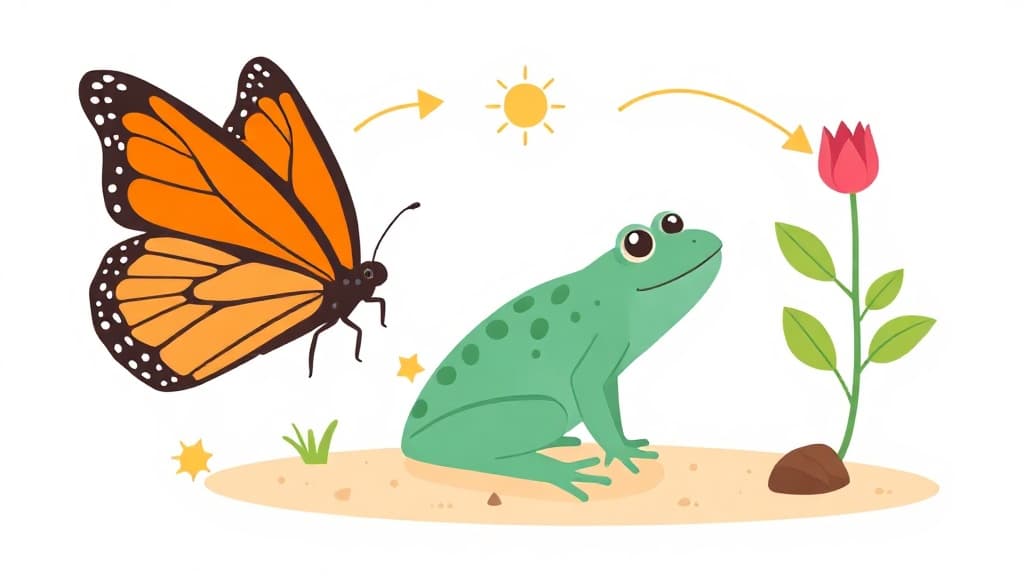
Life Cycle Explainer โ€” AI study tool illustration
๐Ÿงฌ
Biology & Life Science Assistant

Life Cycle Explainer

Life Cycle Explainer turns complex biology into clear, memorable explanations your child can actually understand. It uses simple language and helpful analogies to break down every topic โ€” from cell structure and genetics to ecosystems and the human body.

yearYear 7Year 8Year 9Year 10Year 11Free foreverUK Curriculum
Applaa AI Assistant โ€” Live Preview Live
Explain how photosynthesis works.
๐Ÿ‘จโ€๐Ÿ’ป
Photosynthesis is how plants make their own food! Think of a leaf as a tiny solar-powered kitchen: 1. **Ingredients:** Water (absorbed by roots) + Carbon Dioxide (absorbed from air) + Sunlight (captured by green chlorophyll in leaves). 2. **Cooking:** Sunlight energy powers a chemical reaction that combines water and carbon dioxide. 3. **Food Served:** Out comes **Glucose** (sugar energy for the plant to grow) and **Oxygen** (which they release into the air for us to breathe!). Equation: Water + Carbon Dioxide + Light โž” Glucose + Oxygen. Pretty amazing, right?

How to use Life Cycle Explainer

1

Open Applaa and select this tool from AI Assistants.

2

Describe the biology topic you're studying or paste a question from your textbook.

3

Get a clear explanation with real-world examples โ€” ask any follow-up question as many times as needed.

What you can do with Life Cycle Explainer

Learn about Butterfly, Frog, Plant cycles. Here are some of the most popular ways students use Life Cycle Explainer every day:

  • Makes complex biology genuinely accessible at every level
  • Covers GCSE, A-Level, and IB Biology comprehensively
  • Great for revision, homework help, and science fair projects
  • Ask unlimited follow-up questions โ€” the AI never loses patience or gives up on you
  • Works alongside any textbook, worksheet, or school resource

Life Cycle Explainer reveals one of nature's most elegant patterns: how living things grow, reproduce, and pass on their genes. Whether exploring the miraculous butterfly metamorphosis (egg to caterpillar to chrysalis to butterfly), the frog's aquatic adventure from tadpole to adult, or how flowering plants produce seeds, this tool makes complex cycles simple and memorable. It's essential for Key Stage 2 science, GCSE Biology, and anyone fascinated by how life continues. Inside Applaa, your child follows each stage, understands what's happening biologically, and sees why these cycles matter for survival and evolution. Rather than memorising diagrams, your child builds a genuine understanding of why butterflies need caterpillars to eat plants, why frogs start in water but move to land, and how seeds spread across the world. It's the kind of learning that turns a textbook topic into real wonder about nature.

4 weeks
Time from butterfly egg to adult
100%
Free forever on Applaa
6-9 years
Typical frog lifespan in the wild

How to use Life Cycle Explainer effectively

Choose one organism and follow its entire life cycle from beginning to end, asking 'why' at each stage. For a butterfly: why does a caterpillar need to eat so much? (Because it's growing and storing energy.) Why does it build a chrysalis? (To transform and protect itself during metamorphosis.) Why must an adult butterfly find a mate quickly? (Because its adult life is short and it needs to reproduce.) Then explore how the cycle repeats. Connect the life cycle to environmental needs: butterflies need specific plants for caterpillars to eat; frogs need ponds for tadpoles; flowering plants need pollinators. Practice drawing and labelling the cycle, which helps you remember and understand it for exams.

  • Follow the complete cycle from start to finish, understanding the purpose of each stage
  • Ask 'why' questions: why does each stage exist and what does the organism gain from it?
  • Understand the environmental requirements for each stage: What does a tadpole need from water? What does a caterpillar need to eat?
  • Connect life cycles to reproduction and survival โ€” cycles ensure genes pass to the next generation
  • Compare different life cycles to spot patterns: all organisms need to grow, reproduce, and ensure offspring survive

Common confusions about life cycles

Many students think life cycles are just 'neat patterns' without understanding why they're shaped that way. They'll memorise that a tadpole becomes a frog but not understand that tadpoles breathe through gills (water) while adult frogs breathe through lungs (land) and skin. Students also often miss that the cycle's purpose is reproduction and gene survival. Another common gap: not realising that different organisms have wildly different life cycles โ€” some lay thousands of eggs (high mortality strategy), others have fewer offspring but invest more care (high survival strategy).

  • Don't just memorise stages โ€” understand why each stage exists and what biological process is happening
  • Don't ignore adaptation: tadpoles have gills because they live in water; frogs have lungs because they live on land
  • Don't treat the cycle as random โ€” each stage is shaped by the organism's environment and survival needs
  • Don't forget that reproduction is the point: life cycles exist so genes get passed to offspring
  • Don't think all life cycles are the same length โ€” some organisms complete cycles in weeks; others take years

Getting started

Getting started with Life Cycle Explainer

Step 1

Download the free Applaa app on Windows, Mac, or mobile

Step 2

Go to AI Assistants and select Life Cycle Explainer from Biology & Life Science

Step 3

Choose the butterfly life cycle first and follow all four stages in detail

Step 4

Move to frogs and flowering plants, then compare the three cycles to spot patterns

1 month free, then 50% off for 3 months โ€” ยฃ4.99/mo

While Other Kids Get an AI Head Start, Is Yours Falling Behind?

Give your child the same AI app-building, exam prep and tutoring edge โ€” free for the first month, no credit card needed.

Join 10,000+ students building their first AI-powered apps with Applaa

Frequently asked questions about Life Cycle Explainer

Do I need to memorise every stage of every life cycle?

GCSE expects you to know the major stages of key organisms (butterfly, frog, flowering plant). But more important than memorisation is understanding why each stage exists and what's happening biologically. That understanding makes the stages easy to recall.

Why do some insects look completely different as caterpillars versus adults?

This is called complete metamorphosis, and it's brilliant evolutionary design. A caterpillar is built for eating plants; a butterfly is built for reproduction and spreading pollen. Transforming completely lets them be perfectly adapted to each job without compromise.

Are all animal life cycles as dramatic as butterflies and frogs?

No. Humans and many mammals have much less dramatic cycles โ€” babies are born live, grow gradually, and reach adulthood. Some animals don't change much at all. Butterflies and frogs just happen to be spectacular examples often used in school because they're easy to observe.

Why do some plants spread seeds while others grow from bulbs?

Different strategies for different environments. Seeds can travel far and adapt to new places (good for colonising new areas). Bulbs grow clones close by (good for filling a space quickly). Understanding life cycles means seeing these as solutions to different problems.

Get Life Cycle Explainer free

Life Cycle Explainer and 500+ other safe AI assistants are available free inside the Applaa desktop app.

Windows 10+ ยท macOS 12+ ยท UK National Curriculum aligned

Why Parents Choose Applaa

  • 100% free โ€” no subscription ever
  • Aligned to the UK National Curriculum
  • Works for KS1 through A-Level
  • No ads, no data selling, no distractions
  • Kid-safe, COPPA-compliant, UK GDPR

Ready for Exam Prep?

Explore GCSE, 11+, A-Level, and Olympiad revision modules in the Applaa Learning Hub.

Go to Learning Hub