๐Ÿ‡ฌ๐Ÿ‡ง Limited Time โ€” UK Onlyยท๐ŸŽ“ Free Learning for 1 Monthยท๐Ÿค– Free AI Training Includedยท๐Ÿ“š 4,000+ Lessons ยท 35,000+ Quizzesยท๐Ÿ† GCSE Mocks ยท Olympiad Papersยทโšก Selected Students Only ยท Limited Placesยท๐ŸŽ Free Value Worth ยฃ2,000ยท๐Ÿ‡ฌ๐Ÿ‡ง Limited Time โ€” UK Onlyยท๐ŸŽ“ Free Learning for 1 Monthยท๐Ÿค– Free AI Training Includedยท๐Ÿ“š 4,000+ Lessons ยท 35,000+ Quizzesยท๐Ÿ† GCSE Mocks ยท Olympiad Papersยทโšก Selected Students Only ยท Limited Placesยท๐ŸŽ Free Value Worth ยฃ2,000ยท๐Ÿ‡ฌ๐Ÿ‡ง Limited Time โ€” UK Onlyยท๐ŸŽ“ Free Learning for 1 Monthยท๐Ÿค– Free AI Training Includedยท๐Ÿ“š 4,000+ Lessons ยท 35,000+ Quizzesยท๐Ÿ† GCSE Mocks ยท Olympiad Papersยทโšก Selected Students Only ยท Limited Placesยท๐ŸŽ Free Value Worth ยฃ2,000ยท
Back to AI Assistants Directory
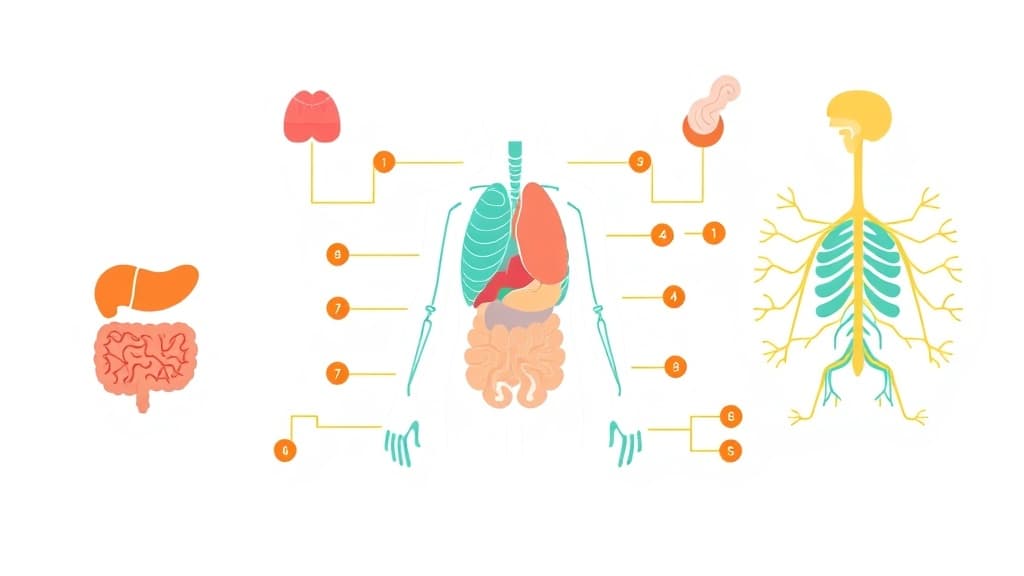
Human Body Systems โ€” AI study tool illustration
๐Ÿงฌ
Biology & Life Science Assistant

Human Body Systems

Human Body Systems turns complex biology into clear, memorable explanations your child can actually understand. It uses simple language and helpful analogies to break down every topic โ€” from cell structure and genetics to ecosystems and the human body.

yearYear 7Year 8Year 9Year 10Year 11Free foreverUK Curriculum
Applaa AI Assistant โ€” Live Preview Live
Explain how photosynthesis works.
๐Ÿ‘จโ€๐Ÿ’ป
Photosynthesis is how plants make their own food! Think of a leaf as a tiny solar-powered kitchen: 1. **Ingredients:** Water (absorbed by roots) + Carbon Dioxide (absorbed from air) + Sunlight (captured by green chlorophyll in leaves). 2. **Cooking:** Sunlight energy powers a chemical reaction that combines water and carbon dioxide. 3. **Food Served:** Out comes **Glucose** (sugar energy for the plant to grow) and **Oxygen** (which they release into the air for us to breathe!). Equation: Water + Carbon Dioxide + Light โž” Glucose + Oxygen. Pretty amazing, right?

How to use Human Body Systems

1

Open Applaa and select this tool from AI Assistants.

2

Describe the biology topic you're studying or paste a question from your textbook.

3

Get a clear explanation with real-world examples โ€” ask any follow-up question as many times as needed.

What you can do with Human Body Systems

Learn about Digestive, Circulatory, Nervous systems. Here are some of the most popular ways students use Human Body Systems every day:

  • Makes complex biology genuinely accessible at every level
  • Covers GCSE, A-Level, and IB Biology comprehensively
  • Great for revision, homework help, and science fair projects
  • Ask unlimited follow-up questions โ€” the AI never loses patience or gives up on you
  • Works alongside any textbook, worksheet, or school resource

Human Body Systems makes understanding your own body fascinating and crystal clear. Whether learning about how your digestive system breaks down breakfast, how your heart pumps oxygen around your body, or how your nervous system lets you react in a split second, this tool reveals how brilliant your biology really is. It's essential for GCSE Biology (where body systems are a major topic), Key Stage 3 science, and anyone curious about why their body works the way it does. Inside Applaa, your child explores each system โ€” digestive, circulatory, nervous, respiratory, and more โ€” seeing how they connect and depend on each other. It's personalised, never overwhelming, and transforms abstract diagrams into living, breathing (literally!) understanding. Your child won't just pass exams; they'll actually understand their own biology.

75%+
GCSE marks related to body systems
100%
Free forever through Applaa
500+
Different organ and system combinations possible

How to use Human Body Systems effectively

Pick one system at a time and follow its journey from start to finish. For example, with digestion: follow food from your mouth through your oesophagus, stomach, small intestine, to large intestine. Understand what happens at each stage and why. Then explore the circulatory system: follow blood from your heart, through arteries and capillaries, back through veins. The key is following the 'journey' rather than memorising separate facts. Connect systems together: the digestive system absorbs nutrients that the circulatory system delivers; the nervous system controls both. Ask questions about why your heart rate increases during exercise or why you feel sick after eating too much.

  • Follow the 'journey' through each system โ€” food through digestion, blood through circulation โ€” rather than memorising isolated facts
  • Sketch simple diagrams as you learn, labelling key organs and showing how they connect
  • Understand the purpose of each system first (digestion breaks down food, circulation delivers oxygen) before memorising structures
  • Connect systems together: see how digestion, circulation, and respiration all work as a team
  • Relate learning to your own body: notice your heart rate increase during exercise, feel digestion working after meals

Common gaps in body systems understanding

Students often memorise organ names without understanding their function, then panic when exam questions ask 'why' instead of 'what'. Many also fail to see that body systems work together โ€” thinking of them as separate rather than interconnected. Another huge gap: not understanding exchange surfaces (lungs, intestines, capillaries) and why they're shaped the way they are. The solution is asking 'why' constantly: why does the small intestine have villi? Because it needs a huge surface area to absorb nutrients.

  • Memorising organ names without understanding their function is pointless โ€” focus on the 'why' first
  • Don't treat systems as separate โ€” constantly think about how they connect and support each other
  • Don't ignore exchange surfaces โ€” understand that villi, alveoli, and capillary walls exist for a reason
  • Don't just label diagrams โ€” be able to explain what each organ or tissue does and why
  • Don't forget that body systems maintain homeostasis โ€” they all work to keep conditions stable inside your body

Getting started

Getting started with Human Body Systems

Step 1

Download the free Applaa app on any device and log in

Step 2

Go to Biology & Life Science and open Human Body Systems

Step 3

Choose the digestive system first and follow food from mouth to large intestine

Step 4

Move to circulatory and nervous systems, then connect all three together

1 month free, then 50% off for 3 months โ€” ยฃ4.99/mo

While Other Kids Get an AI Head Start, Is Yours Falling Behind?

Give your child the same AI app-building, exam prep and tutoring edge โ€” free for the first month, no credit card needed.

Join 10,000+ students building their first AI-powered apps with Applaa

Frequently asked questions about Human Body Systems

Do I need to know the name of every tiny blood vessel?

No. GCSE expects you to know major vessels (aorta, vena cava, coronary artery) and understand that capillaries are where exchange happens. Focus on understanding function and structure, not memorising a phone book of anatomy.

Why do I need to learn about the nervous system if I'm not studying neuroscience?

Because your nervous system controls your heartbeat, digestion, breathing, and your ability to respond to the world. It's interconnected with every other system. GCSE Biology expects you to understand how your body reacts โ€” the nervous system is how that happens.

How do body systems connect to each other?

Great question. The nervous system controls the heart rate. The circulatory system delivers oxygen that your cells need for respiration. The digestive system provides the glucose that cells burn. The respiratory system brings in oxygen. They're all a team supporting each other.

Is learning about human body systems different if I want to study medicine?

This tool gives you GCSE-level understanding, which is a solid foundation. If medicine is the goal, you'll deepen this knowledge at A-Level Biology and beyond. But starting here with genuine understanding is far better than starting from confusion.

Get Human Body Systems free

Human Body Systems and 500+ other safe AI assistants are available free inside the Applaa desktop app.

Windows 10+ ยท macOS 12+ ยท UK National Curriculum aligned

Why Parents Choose Applaa

  • 100% free โ€” no subscription ever
  • Aligned to the UK National Curriculum
  • Works for KS1 through A-Level
  • No ads, no data selling, no distractions
  • Kid-safe, COPPA-compliant, UK GDPR

Ready for Exam Prep?

Explore GCSE, 11+, A-Level, and Olympiad revision modules in the Applaa Learning Hub.

Go to Learning Hub