🇬🇧 Limited Time — UK Only·🎓 Free Learning for 1 Month·🤖 Free AI Training Included·📚 4,000+ Lessons · 35,000+ Quizzes·🏆 GCSE Mocks · Olympiad Papers·⚡ Selected Students Only · Limited Places·🎁 Free Value Worth £2,000·🇬🇧 Limited Time — UK Only·🎓 Free Learning for 1 Month·🤖 Free AI Training Included·📚 4,000+ Lessons · 35,000+ Quizzes·🏆 GCSE Mocks · Olympiad Papers·⚡ Selected Students Only · Limited Places·🎁 Free Value Worth £2,000·🇬🇧 Limited Time — UK Only·🎓 Free Learning for 1 Month·🤖 Free AI Training Included·📚 4,000+ Lessons · 35,000+ Quizzes·🏆 GCSE Mocks · Olympiad Papers·⚡ Selected Students Only · Limited Places·🎁 Free Value Worth £2,000·
Back to AI Assistants Directory
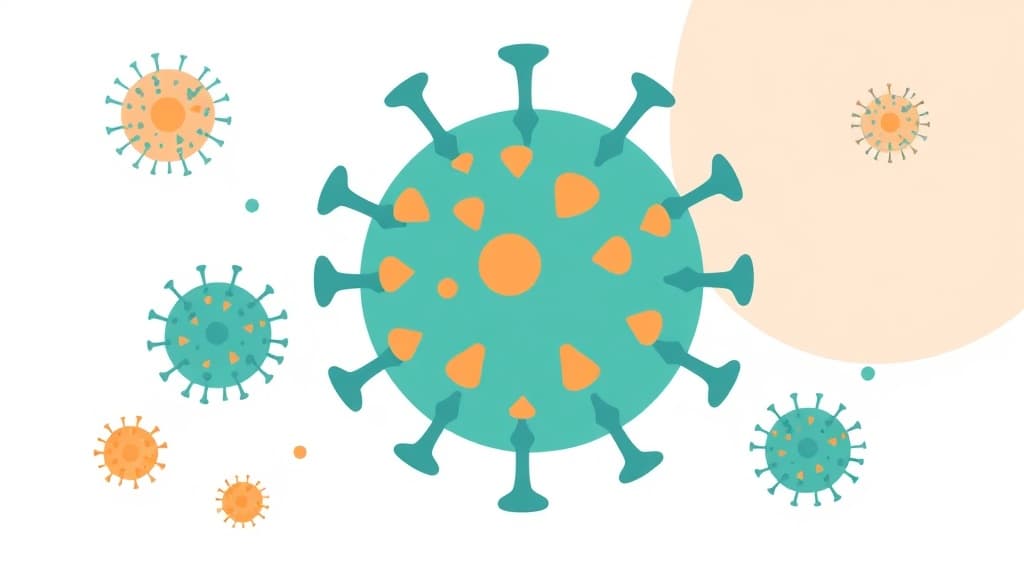
Disease & Immunity Tutor — AI study tool illustration
🧬
Biology & Life Science Assistant

Disease & Immunity Tutor

Disease & Immunity Tutor turns complex biology into clear, memorable explanations your child can actually understand. It uses simple language and helpful analogies to break down every topic — from cell structure and genetics to ecosystems and the human body.

yearYear 7Year 8Year 9Year 10Year 11Free foreverUK Curriculum
Applaa AI Assistant — Live Preview Live
Explain how photosynthesis works.
👨‍💻
Photosynthesis is how plants make their own food! Think of a leaf as a tiny solar-powered kitchen: 1. **Ingredients:** Water (absorbed by roots) + Carbon Dioxide (absorbed from air) + Sunlight (captured by green chlorophyll in leaves). 2. **Cooking:** Sunlight energy powers a chemical reaction that combines water and carbon dioxide. 3. **Food Served:** Out comes **Glucose** (sugar energy for the plant to grow) and **Oxygen** (which they release into the air for us to breathe!). Equation: Water + Carbon Dioxide + Light ➔ Glucose + Oxygen. Pretty amazing, right?

How to use Disease & Immunity Tutor

1

Open Applaa and select this tool from AI Assistants.

2

Describe the biology topic you're studying or paste a question from your textbook.

3

Get a clear explanation with real-world examples — ask any follow-up question as many times as needed.

What you can do with Disease & Immunity Tutor

How viruses work and how we fight them. Here are some of the most popular ways students use Disease & Immunity Tutor every day:

  • Makes complex biology genuinely accessible at every level
  • Covers GCSE, A-Level, and IB Biology comprehensively
  • Great for revision, homework help, and science fair projects
  • Ask unlimited follow-up questions — the AI never loses patience or gives up on you
  • Works alongside any textbook, worksheet, or school resource

The Disease & Immunity Tutor unpacks how viruses, bacteria, and parasites invade your body, and how your immune system fights back—knowledge that's never been more relevant for UK students. From the 2020 pandemic to seasonal flu, understanding disease transmission, immune response, and vaccination is essential science literacy. GCSE Biology devotes a whole unit to communicable and non-communicable diseases; A-Level biology layers in specific immune mechanisms (antibody production, phagocytosis, memory cells). Applaa's Disease & Immunity Tutor combines interactive diagrams of viral structure, animated immune responses, and real-world case studies (COVID-19, measles outbreaks, antibiotic resistance) to make pathology vivid. You'll learn why handwashing stops transmission, how vaccines train immunity without infection, and why antibiotic overuse breeds resistance. This tool transforms abstract immunology into survival knowledge, making GCSE and A-Level topics resonate whilst building health awareness for life.

40+
Diseases and pathogens covered with detailed lifecycle diagrams
15+
Interactive immune response animations showing white blood cell action
100%
Aligned to GCSE and A-Level curricula

How to use Disease & Immunity Tutor effectively

Begin with the 'Disease Overview' module, selecting a specific pathogen (flu virus, measles, malaria). The tool displays the organism's structure, lifecycle, and how it enters and replicates in human cells. Next, explore the 'Immune Response' section: follow the steps of innate immunity (skin barrier, white blood cells) and adaptive immunity (antibodies, T-cells, memory). Watch the animated diagram showing a phagocyte engulfing a bacterium, or how antibodies bind to viral antigens. Then examine the 'Prevention & Treatment' module: see why vaccines work (teaching immunity without infection), how antibiotics target bacteria, and why antivirals are challenging. Finally, test yourself with scenario-based questions: 'If someone's vaccinated against measles, why are they protected?' This reinforces the immune mechanism. Review past pandemic case studies to see immunity in action.

  • Master the pathogen's structure first: viruses have surface proteins that immune cells recognise; bacteria have cell walls and flagella
  • Trace the transmission route: respiratory (flu, COVID), faecal-oral (cholera), vector-borne (malaria via mosquito), contact (skin infections)
  • Identify the two immune phases: innate (immediate, non-specific) and adaptive (slower, antigen-specific); both are essential
  • Learn why vaccines teach adaptive immunity: they contain weakened or inactive pathogen material so your body 'practices' immunity
  • Understand antibiotic resistance: overuse in agriculture and medicine breeds resistant strains that antibiotics can't kill
  • Link disease to public health policy: why countries quarantine, vaccinate, and enforce food safety—it's applied immunology

Common mistakes with Disease & Immunity Tutor

Many students conflate viruses with bacteria, assuming all microscopic invaders are the same and treat antibiotics as a universal cure. In reality, viruses require antivirals (and immunity); bacteria respond to antibiotics. Another trap is thinking vaccines create 100% immunity—they dramatically reduce risk but don't guarantee protection, especially for immunocompromised individuals. UK students sometimes overlook the role of public health: disease spreads via behaviour and environment, not just biology. Finally, learners may miss the historical context—antibiotics saved millions but are now overused in agriculture and medicine, driving resistance. Understanding this complexity is key to A-Level essay questions on antibiotic resistance and pandemic preparedness.

  • Don't equate viruses and bacteria: viruses need host cells to replicate; bacteria are independent cells that antibiotics can damage
  • Recall that immunity isn't binary: even vaccinated people can get infected, but their immune system responds faster and stronger
  • Recognise that antibiotic resistance emerges from overprescription and agricultural use, not from individual patients stopping doses early (a myth)
  • Link immunity to poverty and geography: diseases persist in regions with poor sanitation, malnutrition, and limited vaccine access
  • Avoid 'germ theory' thinking that ignores host factors: malnutrition, stress, and sleep weakens immunity, making infection likelier
  • Remember that pandemics spread through human behaviour and mobility, not just biology—COVID-19 thrived because people gathered, travelled, and touched surfaces

Getting started

Getting started with Disease & Immunity Tutor

Step 1

Download Applaa free and open 'Disease & Immunity Tutor' under Biology & Life Science

Step 2

Select one familiar disease (flu, measles, or chickenpox) and explore its pathogen structure, transmission route, and immune response

Step 3

Watch the animated diagrams of how antibodies and white blood cells attack the pathogen—pause and sketch the steps in your notes

Step 4

Quiz yourself: 'Why does vaccination work?' and 'What makes a bacterium resistant to antibiotics?' using the tool's recall questions

1 month free, then 50% off for 3 months — £4.99/mo

While Other Kids Get an AI Head Start, Is Yours Falling Behind?

Give your child the same AI app-building, exam prep and tutoring edge — free for the first month, no credit card needed.

Join 10,000+ students building their first AI-powered apps with Applaa

Frequently asked questions about Disease & Immunity Tutor

How is immunity different in the Tutor compared to school textbooks?

Textbooks show static diagrams; our tool animates the immune response step-by-step. You'll see a phagocyte engulfing bacteria, antibodies binding to viral surfaces, and memory cells persisting years after infection. This visual, dynamic approach helps complex immunology stick.

Will this tool help me understand why I need boosters if I'm vaccinated?

Yes. Vaccines train your adaptive immune system to produce antibodies and memory cells, but antibody levels wane over months or years. Boosters refresh immunity before levels drop too low. Our module on vaccine mechanisms explains this timing and why some diseases require multiple shots (protection stacking) whilst others need refreshers.

Is antibiotic resistance covered for A-Level biology?

Absolutely. The Tutor includes a dedicated section on how antibiotic resistance emerges: mutations in bacteria allow survival despite antibiotics; overuse in medicine and farming accelerates this selection. You'll grasp why doctors now prescribe antibiotics sparingly and why the UK government restricts agricultural antibiotic use. This ties directly to A-Level evolution and medical ethics questions.

Can I use case studies from this tool in GCSE essays?

Yes. Our tool profiles real case studies: the 2009 H1N1 pandemic, measles outbreaks in undervaccinated communities, and the COVID-19 response. Each includes dates, outcomes, and the immunological reason for what happened. Cite these in essays to show applied understanding rather than just memorised facts.

Get Disease & Immunity Tutor free

Disease & Immunity Tutor and 500+ other safe AI assistants are available free inside the Applaa desktop app.

Windows 10+ · macOS 12+ · UK National Curriculum aligned

Why Parents Choose Applaa

  • 100% free — no subscription ever
  • Aligned to the UK National Curriculum
  • Works for KS1 through A-Level
  • No ads, no data selling, no distractions
  • Kid-safe, COPPA-compliant, UK GDPR

Ready for Exam Prep?

Explore GCSE, 11+, A-Level, and Olympiad revision modules in the Applaa Learning Hub.

Go to Learning Hub