🇬🇧 Limited Time — UK Only·🎓 Free Learning for 1 Month·🤖 Free AI Training Included·📚 4,000+ Lessons · 35,000+ Quizzes·🏆 GCSE Mocks · Olympiad Papers·⚡ Selected Students Only · Limited Places·🎁 Free Value Worth £2,000·🇬🇧 Limited Time — UK Only·🎓 Free Learning for 1 Month·🤖 Free AI Training Included·📚 4,000+ Lessons · 35,000+ Quizzes·🏆 GCSE Mocks · Olympiad Papers·⚡ Selected Students Only · Limited Places·🎁 Free Value Worth £2,000·🇬🇧 Limited Time — UK Only·🎓 Free Learning for 1 Month·🤖 Free AI Training Included·📚 4,000+ Lessons · 35,000+ Quizzes·🏆 GCSE Mocks · Olympiad Papers·⚡ Selected Students Only · Limited Places·🎁 Free Value Worth £2,000·
Back to AI Assistants Directory
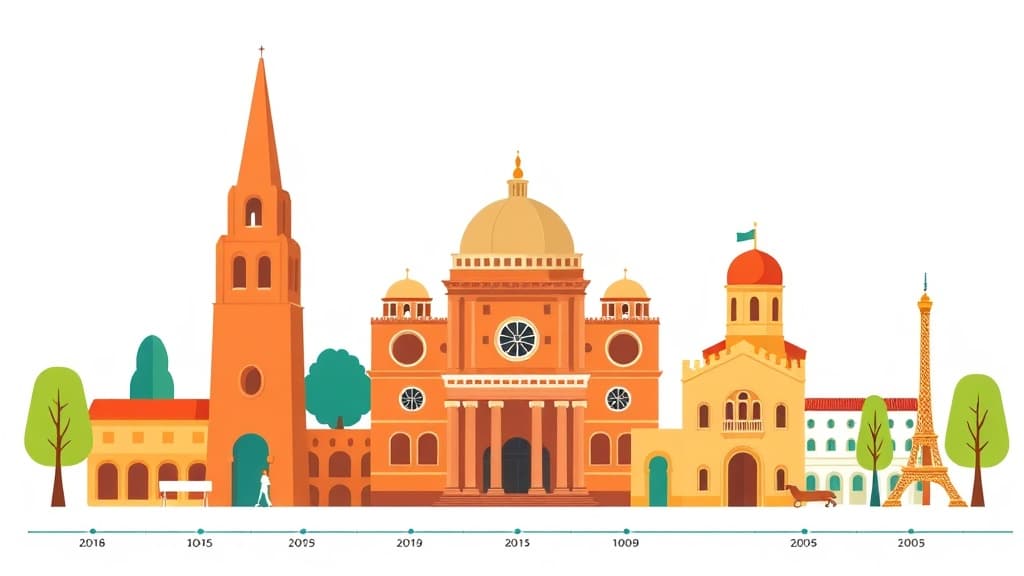
Art History Timeline — AI study tool illustration
🎨
Visual Art Assistant

Art History Timeline

Art History Timeline is a creative art mentor that nurtures your child's artistic skills and visual knowledge. From understanding art movements and techniques to getting practical drawing tips and creative inspiration, it gives thoughtful guidance that builds genuine artistic confidence.

yearYear 7Year 8Year 9Year 10Year 11Free foreverUK Curriculum
Applaa AI Assistant — Live Preview Live
Help me understand this topic for my school revision.
👨‍💻
I'd love to help! Let's break this down into bite-sized pieces. First, tell me what year group you are in and if you have any homework questions. I will explain it step-by-step with real-world examples, and we can do a quick quiz at the end to make sure it makes perfect sense!

How to use Art History Timeline

1

Open Applaa and find this tool in AI Assistants.

2

Describe what you're working on, want to learn, or feel inspired to create.

3

Get tailored tips, historical context, technique guidance, and creative prompts.

What you can do with Art History Timeline

Renaissance to Modern art. Here are some of the most popular ways students use Art History Timeline every day:

  • Covers art theory, history, and hands-on techniques
  • Provides creative prompts whenever inspiration runs dry
  • Supports all skill levels from complete beginner to advanced
  • Ask unlimited follow-up questions — the AI never loses patience or gives up on you
  • Works alongside any textbook, worksheet, or school resource

Art history isn't a boring list of dates and dead artists—it's a visual story of how humans have expressed themselves, responded to their world, and pushed boundaries across centuries. Applaa's Art History Timeline presents this story as an interactive journey from the Renaissance through to contemporary art, showing you how each era built on and rebelled against the previous one. You'll see how Renaissance painters mastered perspective and anatomy; how Baroque artists created drama with light and shadow; how Impressionists ditched photographic accuracy to capture fleeting light; how Cubists fragmented reality; and how contemporary artists push into new territories with technology and social commentary. For GCSE Art and Design students, this timeline is your revision roadmap—visual, chronological, and packed with the context examiners expect. For A-Level Fine Art, it's your foundational understanding of artistic movements and the cultural forces that shaped them. Applaa doesn't just show you artworks in order; it explains why they matter, how they connected to society, and which artists influenced which. Suddenly, art history transforms from isolated facts into a connected, fascinating narrative of human creativity.

500+
Years of art history covered by Applaa's timeline from Renaissance to present day
1,000+
Artworks, artist profiles, and historical context pieces available via the interactive timeline
Free forever
Complete art history education via Applaa requires no premium subscription or textbook purchase

How to use Art History Timeline effectively

Start by exploring the timeline chronologically: Renaissance → Baroque → Neoclassicism → Romanticism → Realism → Impressionism → Post-Impressionism → Modernism → Contemporary. For each era, study the key characteristics: What were artists rebelling against? What new technique or philosophy did they pioneer? Applaa's timeline pairs dates with historical events (Industrial Revolution, World Wars, technological breakthroughs), showing how society shaped art. Click on individual artworks to read artist bios, technical explanations, and cultural context. Create a personal study guide: write down each era's three key features and one representative artist per style. Use the timeline's filtering feature to explore by theme: 'How has portraiture evolved?' or 'How do artists represent war?' or 'What role does colour play across eras?' This thematic approach deepens understanding beyond rote memorisation. Finally, connect past to present: choose a contemporary artwork and trace its ancestors backward through the timeline, identifying which historical movements influenced it.

  • Study the timeline in historical order once, then jump around thematically to understand how ideas evolved and recurred across centuries
  • Link each artistic movement to its cultural moment: Romanticism → Industrial Revolution; Cubism → Einstein's relativity; Expressionism → emotional intensity post-WWI
  • Create visual notes by screenshotting or saving images from Applaa's timeline; a visual guide is far more effective for remembering styles than text-only notes
  • Identify signature artists per era: Da Vinci (Renaissance), Caravaggio (Baroque), Monet (Impressionism), Picasso (Cubism), Basquiat (contemporary)
  • Test yourself by examining an artwork you've never seen and naming its era, approximate date, and key characteristics based on style
  • Discuss the timeline with classmates or teachers; explaining why an artwork matters deepens your own understanding and reveals gaps

Common mistakes with Art History Timeline

Students often treat eras as isolated boxes, memorising 'Renaissance = perspective' without connecting it to the next movement. Another trap is focusing exclusively on 'famous' artworks while ignoring lesser-known artists who were equally innovative. Many learners also skip the 'why'—understanding that Impressionism emerged when photography made representational painting feel redundant, or that Abstraction exploded during industry and urbanisation, transforms dry facts into compelling narrative. Beginners also ignore contemporary art, assuming it's less rigorous or important than historical movements—in reality, contemporary artists engage with the same questions as their predecessors but through modern lenses. Finally, students sometimes memorise timelines without looking at actual artworks; reading about Impressionism is forgettable, but seeing Monet's Water Lilies is unforgettable.

  • Never treat each era as isolated; always ask 'What did the previous movement do that this one reacts against?'
  • Avoid focusing only on 'famous' artists; learning about less-celebrated figures reveals how movements actually worked on the ground
  • Don't skip the 'historical context' sections; understanding that WWI changed human psychology helps you grasp Expressionism emotionally, not just visually
  • Never ignore contemporary art thinking it's too new or trendy; contemporary artists are highly conceptual and push boundaries as much as Renaissance pioneers
  • Avoid memorising dates obsessively; approximate decades matter (e.g. 'Impressionism = 1870s-80s'), but exact years are less important than understanding progression
  • Don't passively read the timeline; actively engage by guessing an artwork's era before checking the answer or explaining to someone else why it belongs to its movement

Getting started

Your 4-Step Art History Timeline Learning Plan

Step 1

Download Applaa free and explore the Art History Timeline module from start to finish, watching introductions to each major era (Renaissance through Contemporary)

Step 2

Create a visual study guide: collect one representative artwork from each era and write three defining characteristics and one artist name next to each image

Step 3

Use Applaa's quiz feature to test yourself weekly on artwork identification, era guessing, and historical context—progress from 'name the era' to 'explain why this painting is significant'

Step 4

Choose a contemporary artwork from Applaa's timeline and trace its lineage backward: identify which historical movements influenced it and present your findings to classmates or teachers

1 month free, then 50% off for 3 months — £4.99/mo

While Other Kids Get an AI Head Start, Is Yours Falling Behind?

Give your child the same AI app-building, exam prep and tutoring edge — free for the first month, no credit card needed.

Join 10,000+ students building their first AI-powered apps with Applaa

Frequently asked questions about Art History Timeline

How do I memorise 500 years of art history for my GCSE or A-Level exam?

Focus on patterns, not facts. Instead of memorising every artwork, learn the core features of five eras (Renaissance, Impressionism, Modernism, Surrealism, Contemporary) and dive deeper into your exam board's specific requirements. Understand the 'why' (historical context) rather than just dates. Applaa's timeline emphasises this approach.

Do I need to memorise every artist's life story?

No—examiners want you to analyse artworks and understand movements, not recite biographies. However, knowing 1-2 key biographical details per artist (e.g. Van Gogh's mental health struggles influenced Expressionism) helps you interpret their work and remember their significance.

Why do we learn art history if we're just going to make our own art?

Art history teaches you how artists solve problems, what's been tried before, and which innovations changed everything. You'll avoid reinventing the wheel, you'll reference historical movements intentionally rather than accidentally, and you'll develop a more sophisticated artistic voice by understanding your creative lineage.

Is the art history timeline the same for all exam boards?

The core movements (Renaissance, Impressionism, Modernism, etc.) are universal, but different exam boards weight certain eras differently. Check your exam board's specification (AQA, Edexcel, OCR) for their specific focus areas, then use Applaa's timeline for the broader picture and deeper learning.

Get Art History Timeline free

Art History Timeline and 500+ other safe AI assistants are available free inside the Applaa desktop app.

Windows 10+ · macOS 12+ · UK National Curriculum aligned

Why Parents Choose Applaa

  • 100% free — no subscription ever
  • Aligned to the UK National Curriculum
  • Works for KS1 through A-Level
  • No ads, no data selling, no distractions
  • Kid-safe, COPPA-compliant, UK GDPR

Ready for Exam Prep?

Explore GCSE, 11+, A-Level, and Olympiad revision modules in the Applaa Learning Hub.

Go to Learning Hub