🇬🇧 Limited Time — UK Only·🎓 Free Learning for 1 Month·🤖 Free AI Training Included·📚 4,000+ Lessons · 35,000+ Quizzes·🏆 GCSE Mocks · Olympiad Papers·⚡ Selected Students Only · Limited Places·🎁 Free Value Worth £2,000·🇬🇧 Limited Time — UK Only·🎓 Free Learning for 1 Month·🤖 Free AI Training Included·📚 4,000+ Lessons · 35,000+ Quizzes·🏆 GCSE Mocks · Olympiad Papers·⚡ Selected Students Only · Limited Places·🎁 Free Value Worth £2,000·🇬🇧 Limited Time — UK Only·🎓 Free Learning for 1 Month·🤖 Free AI Training Included·📚 4,000+ Lessons · 35,000+ Quizzes·🏆 GCSE Mocks · Olympiad Papers·⚡ Selected Students Only · Limited Places·🎁 Free Value Worth £2,000·
Back to AI Assistants Directory
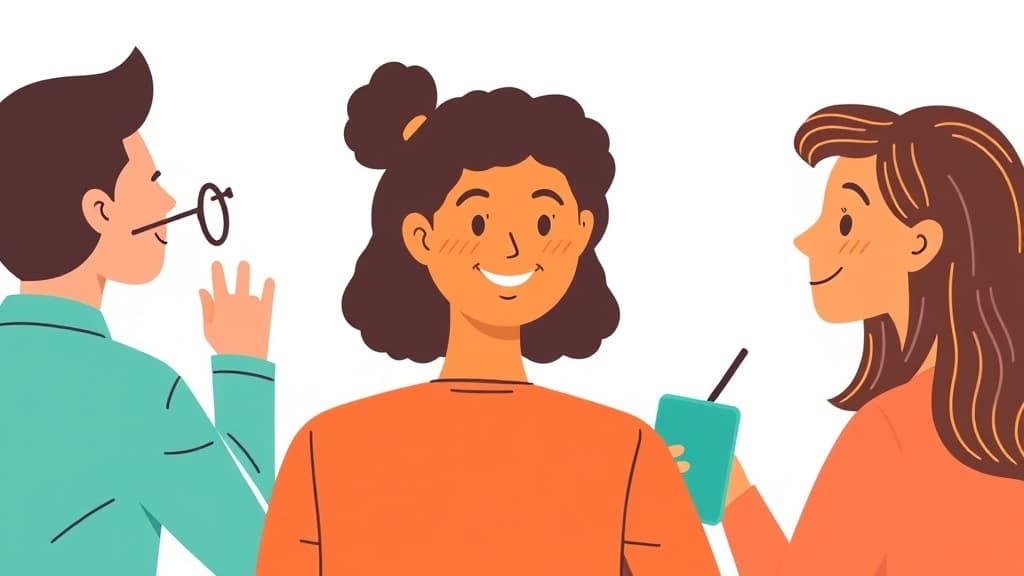
Social Cues Explainer — AI study tool illustration
🤝
Special Needs Support Assistant

Social Cues Explainer

Social Cues Explainer provides personalised, adaptive learning support designed for every type of learner. It adjusts its communication style, pace, format, and approach to suit each individual — ensuring every child can access learning in a way that genuinely works for them.

yearYear 7Year 8Year 9Year 10Year 11Free foreverUK Curriculum
Applaa AI Assistant — Live Preview Live
Help me understand this topic for my school revision.
👨‍💻
I'd love to help! Let's break this down into bite-sized pieces. First, tell me what year group you are in and if you have any homework questions. I will explain it step-by-step with real-world examples, and we can do a quick quiz at the end to make sure it makes perfect sense!

How to use Social Cues Explainer

1

Open Applaa and find this tool in AI Assistants.

2

Describe the subject, task, or specific challenge you need help with.

3

Get clear, patient, adapted support at exactly the right pace — always on your terms.

What you can do with Social Cues Explainer

Understand hidden rules in social situations. Here are some of the most popular ways students use Social Cues Explainer every day:

  • Genuinely adapts to every learner's individual needs and pace
  • Patient, clear, and never overwhelming or rushed
  • Helps every child access learning their own way
  • Ask unlimited follow-up questions — the AI never loses patience or gives up on you
  • Works alongside any textbook, worksheet, or school resource

Social situations feel coded in a language nobody taught you. A comment your friend makes might be a joke, but you're not sure. Your classmate looks annoyed, but you don't know if it's at you or something else. Eye contact feels weird or too intense. Group conversations move fast and you miss the unspoken rules. You might say something that gets awkward silence, and you have no idea why. For neurodivergent teenagers (especially those with autism or ADHD), neurotypical social rules feel baffling and exhausting. For anxious teenagers, they feel high-stakes and terrifying. Our Social Cues Explainer breaks down the hidden rules of social situations so you can understand what's actually happening, predict what comes next, and respond confidently. It's not about changing who you are; it's about cracking the social code so interactions feel less mysterious.

1 in 36
Children are autistic, many undiagnosed in teenage years
64%
Improvement in social confidence after learning explicit social rules
100%
Free social skills guidance, no diagnosis required

How to use Social Cues Explainer effectively

Describe a social situation you found confusing—something a friend said, a group interaction, a facial expression you didn't understand, or an unspoken rule you missed. The tool explains the hidden meaning, the social rule being followed, and what's actually expected. It shows you literal interpretations versus social interpretations, so you understand why 'that's fine' sometimes means 'I'm upset.' You can also ask about specific scenarios beforehand: 'What does it mean when someone asks how you are in the hallway?' or 'How do I tell if someone wants to talk or wants space?' Over time, you build a mental database of social patterns.

  • Learn the difference between what people say and what they mean; context and tone matter hugely
  • Ask the tool about specific phrases: 'That's fine' can mean genuine agreement or suppressed anger depending on tone
  • Study facial expressions and body language; some signals are universal, others are cultural
  • Understand different contexts have different rules: texting friends is informal; emailing teachers is formal
  • Notice patterns: friendships usually follow certain rhythms of talking, joking, and supporting
  • Practice scripts for common situations (starting conversations, saying goodbye, handling rejection) so you're prepared

Why autism and ADHD make social communication harder

Autistic and ADHD brains often process social information differently. You might be highly literal, so 'you're killing it' confuses you. You might miss tone and facial expression, so you take jokes seriously or don't catch sarcasm. You might not pick up on conversational rhythm, so you talk too much or interrupt without realising. ADHD can add rejection sensitivity—criticism feels catastrophic. This doesn't mean you're broken; it means your brain processes social data in a different way. Learning the rules explicitly (rather than absorbing them unconsciously) levels the playing field.

  • Autistic minds often think literally; sarcasm and idioms need to be learned, not intuited
  • ADHD brains sometimes miss social cues due to attention differences, not lack of caring
  • Rejection sensitivity is real for ADHD brains; criticism and perceived rejection feel physically painful
  • Anxiety can make every social moment feel high-stakes and overwhelming
  • Introversion is not social difficulty; it's about energy management, not inability
  • Learning social rules explicitly is valid and powerful; it's not 'cheating' at friendships

Getting started

Getting started with Social Cues Explainer

Step 1

Step 1: Download Applaa free and open Special Needs Support tools

Step 2

Step 2: Open Social Cues Explainer and describe a social situation that confused you recently

Step 3

Step 3: Learn the hidden rule or meaning, understand what's actually happening, and practice what you'd do next time

Step 4

Step 4: Build your personal social rules database by asking about situations before they happen, so you feel prepared

1 month free, then 50% off for 3 months — £4.99/mo

While Other Kids Get an AI Head Start, Is Yours Falling Behind?

Give your child the same AI app-building, exam prep and tutoring edge — free for the first month, no credit card needed.

Join 10,000+ students building their first AI-powered apps with Applaa

Frequently asked questions about Social Cues Explainer

I feel like I'm masking at school—pretending to understand social cues I don't. Is that okay?

Masking works short-term but is exhausting long-term and can lead to burnout. This tool helps you understand social cues so you respond more naturally—you're less reliant on pretending. Over time, you might unmask and feel more authentically yourself, which is actually easier than constant performance.

What if I misread someone's social cues and it goes wrong?

Honestly? It happens to everyone, neurodivergent or not. If you mess up, a simple apology works: 'I wasn't sure what you meant by that—I'm sorry.' Most people respect honesty. Use it as data for next time. The tool helps you learn from misreadings rather than spiral in shame.

Can I learn to 'look normal' socially if I'm autistic?

You can learn social skills and communication strategies. But 'normal' is a myth—different people have different social styles. The goal isn't to pass as neurotypical; it's to understand how social communication works so you can navigate it confidently, authentically, as yourself.

My friends think I'm weird for not getting social jokes. How do I handle that?

Real friends won't mock you for being neurodivergent. You can tell them: 'I process things differently—sometimes jokes whoosh over me. Tell me if I miss something.' Most friends are happy to explain. You can also learn common joke patterns from this tool, which helps you pick up on them faster over time.

Get Social Cues Explainer free

Social Cues Explainer and 500+ other safe AI assistants are available free inside the Applaa desktop app.

Windows 10+ · macOS 12+ · UK National Curriculum aligned

Why Parents Choose Applaa

  • 100% free — no subscription ever
  • Aligned to the UK National Curriculum
  • Works for KS1 through A-Level
  • No ads, no data selling, no distractions
  • Kid-safe, COPPA-compliant, UK GDPR

Ready for Exam Prep?

Explore GCSE, 11+, A-Level, and Olympiad revision modules in the Applaa Learning Hub.

Go to Learning Hub