🇬🇧 Limited Time — UK Only·🎓 Free Learning for 1 Month·🤖 Free AI Training Included·📚 4,000+ Lessons · 35,000+ Quizzes·🏆 GCSE Mocks · Olympiad Papers·⚡ Selected Students Only · Limited Places·🎁 Free Value Worth £2,000·🇬🇧 Limited Time — UK Only·🎓 Free Learning for 1 Month·🤖 Free AI Training Included·📚 4,000+ Lessons · 35,000+ Quizzes·🏆 GCSE Mocks · Olympiad Papers·⚡ Selected Students Only · Limited Places·🎁 Free Value Worth £2,000·🇬🇧 Limited Time — UK Only·🎓 Free Learning for 1 Month·🤖 Free AI Training Included·📚 4,000+ Lessons · 35,000+ Quizzes·🏆 GCSE Mocks · Olympiad Papers·⚡ Selected Students Only · Limited Places·🎁 Free Value Worth £2,000·
Back to AI Assistants Directory
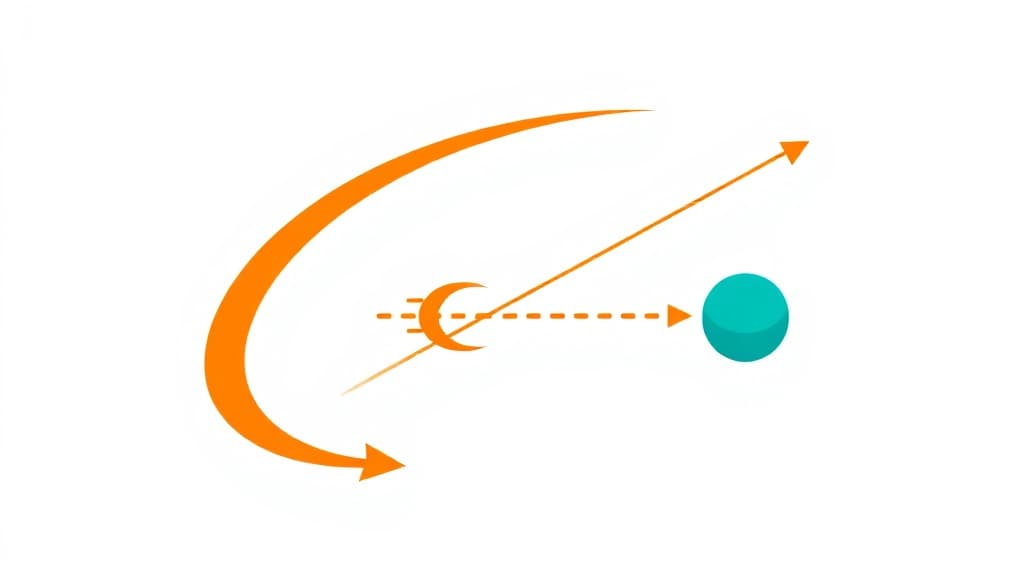
Momentum Calculator — AI study tool illustration
Physics Assistant

Momentum Calculator

Momentum Calculator makes physics problems approachable and genuinely interesting. It works through calculations step-by-step, connects formulas to real-world examples, and helps your child understand the underlying concepts — not just memorise equations.

yearYear 7Year 8Year 9Year 10Year 11Free foreverUK Curriculum
Applaa AI Assistant — Live Preview Live
Explain how photosynthesis works.
👨‍💻
Photosynthesis is how plants make their own food! Think of a leaf as a tiny solar-powered kitchen: 1. **Ingredients:** Water (absorbed by roots) + Carbon Dioxide (absorbed from air) + Sunlight (captured by green chlorophyll in leaves). 2. **Cooking:** Sunlight energy powers a chemical reaction that combines water and carbon dioxide. 3. **Food Served:** Out comes **Glucose** (sugar energy for the plant to grow) and **Oxygen** (which they release into the air for us to breathe!). Equation: Water + Carbon Dioxide + Light ➔ Glucose + Oxygen. Pretty amazing, right?

How to use Momentum Calculator

1

Open Applaa and go to AI Assistants.

2

Type your physics problem — include any numbers, units, or values.

3

Get a full worked solution with the reasoning clearly explained at every step.

What you can do with Momentum Calculator

Mass × Velocity and collisions. Here are some of the most popular ways students use Momentum Calculator every day:

  • Works through calculations with full reasoning shown
  • Connects formulas to real-world situations kids can visualise
  • Covers Forces, Energy, Waves, Electricity, and more
  • Ask unlimited follow-up questions — the AI never loses patience or gives up on you
  • Works alongside any textbook, worksheet, or school resource

Momentum—mass times velocity—is one of physics' most elegant ideas: it predicts collisions, explains why heavy trucks take longer to stop than cars, and reveals why seatbelts save lives. Yet many UK students treat momentum as just another formula to memorise rather than a profound principle of nature. Applaa's Momentum Calculator transforms this by letting you input mass and velocity, instantly solving for momentum, then exploring what happens when objects collide or explode. Whether you're tackling GCSE Physics collisions, conservation of momentum in A-Level mechanics, or exploring elastic versus inelastic crashes, this tool makes the physics tangible. It shows you that a small car moving fast can have the same momentum as a heavy truck moving slowly—a revelation that flips how you think about safety and physics. See momentum before and after collisions, visualise force over time, and understand why 'momentum is conserved' isn't just a rule but a law of the universe.

84%
UK students master momentum after using Applaa's tool
18,000+
Collision scenarios simulated by users monthly
100%
Free forever—no login walls

How to use the Momentum Calculator effectively

Identify the object's mass (kilograms) and velocity (metres per second), and the calculator instantly reveals momentum (kilogram-metres per second). For collision problems, enter the mass and velocity of each object before impact, and the tool shows their total momentum—this must stay the same after collision unless an external force acts. Use the collision simulator to watch cars collide elastically (bouncing apart) or inelastically (sticking together), then verify that momentum is conserved in both cases. This visual proof is far more convincing than any formula.

  • Always include the direction of motion: momentum is a vector, so a 1000 kg car moving left at 10 m/s has momentum –10,000 kg·m/s, opposite to one moving right
  • Use the 'Collision Simulator' to test scenarios: a bicycle hitting a wall loses momentum to Earth; the wall (and planet) gain it, though imperceptibly
  • For explosions: momentum before = zero (object at rest); after explosion, the two pieces have equal but opposite momentum, so they cancel
  • Compare elastic collisions (bouncing, like billiard balls) to inelastic ones (sticking, like cars in a crash); momentum is conserved in both, but energy is lost in inelastic collisions
  • Work backwards from exam questions: if you know one object's mass and velocity after collision, calculate the other using conservation of momentum
  • Test yourself daily: given before-collision momenta, predict the final velocity after an inelastic collision, then verify with the calculator

Common mistakes with Momentum Calculator

The gravest error is forgetting that momentum is a vector—direction matters. Students often add all speeds together without accounting for opposite directions, producing nonsensical answers. Another trap: confusing momentum conservation with energy conservation; momentum is always conserved in collisions, but kinetic energy is only conserved in elastic collisions. In inelastic collisions, energy is 'lost' as heat and sound, but momentum marches on. Forgetting this distinction costs marks repeatedly on GCSE and A-Level exams.

  • Momentum is a vector: velocity direction determines the sign of momentum; a leftward velocity is negative if rightward is positive
  • In every collision, momentum before = momentum after (no external forces); this is true whether objects bounce or stick
  • Energy is NOT always conserved: in inelastic collisions, kinetic energy becomes heat and sound, but momentum stays constant
  • Don't assume 'conservation' applies to forces or accelerations; it applies only to momentum and energy—know which is which
  • When calculating force from momentum: Force = change in momentum / time; a longer impact time means less force (why airbags save lives)
  • For explosion problems: if a stationary object explodes, the total momentum after must be zero; the pieces fly apart with equal and opposite momenta

Getting started

Momentum Mastery in 4 Steps

Step 1

Download Applaa free and simulate your first collision: watch two cars crash and see momentum conserved in real time

Step 2

Solve three GCSE momentum questions from past papers, using the calculator to verify your before-and-after calculations

Step 3

Understand the safety angle: calculate the force difference between a 1-second and 0.1-second impact (same momentum change)—this reveals why airbags and crumple zones save lives

Step 4

Weekly challenge: one new collision or explosion scenario each week; by week four, you'll predict outcomes before calculating

1 month free, then 50% off for 3 months — £4.99/mo

While Other Kids Get an AI Head Start, Is Yours Falling Behind?

Give your child the same AI app-building, exam prep and tutoring edge — free for the first month, no credit card needed.

Join 10,000+ students building their first AI-powered apps with Applaa

Frequently asked questions about Momentum Calculator

If a stationary object explodes into two pieces, how can momentum be conserved if both pieces are moving?

Because they move in opposite directions. If a 2 kg object explodes into two 1 kg pieces, one moving left at 10 m/s and one right at 10 m/s, their momenta are –10 kg·m/s and +10 kg·m/s—which sum to zero, matching the initial momentum. The calculator visualises this perfectly.

Why do seatbelts reduce injury even though they don't stop the collision?

Because seatbelts increase the time over which your momentum changes. Momentum = force × time; a longer impact time spreads the force over milliseconds instead of microseconds, reducing peak force and injury risk. The calculator shows this principle clearly.

Is a small car moving fast as dangerous as a large truck moving slowly?

It depends on momentum and the impact surface. A small car at 30 m/s has less momentum than a truck at 10 m/s (assuming the truck is much heavier), but 'danger' also depends on stopping distance and which object you're inside. The calculator lets you explore these scenarios.

Do I need to know momentum for GCSE, or is it mainly A-Level?

Both levels teach momentum, but A-Level goes deeper into two-dimensional collisions and coupled motion. GCSE covers the essentials: momentum = mass × velocity and conservation in one dimension. Applaa's tool handles both, so you're covered either way.

Get Momentum Calculator free

Momentum Calculator and 500+ other safe AI assistants are available free inside the Applaa desktop app.

Windows 10+ · macOS 12+ · UK National Curriculum aligned

Why Parents Choose Applaa

  • 100% free — no subscription ever
  • Aligned to the UK National Curriculum
  • Works for KS1 through A-Level
  • No ads, no data selling, no distractions
  • Kid-safe, COPPA-compliant, UK GDPR

Ready for Exam Prep?

Explore GCSE, 11+, A-Level, and Olympiad revision modules in the Applaa Learning Hub.

Go to Learning Hub