When do I use Pythagoras vs. trigonometry?
Use Pythagoras' theorem (a² + b² = c²) when you know two sides of a right triangle and need the third. Use trigonometry (sin, cos, tan) when you know one side and an angle, or need to find an angle.
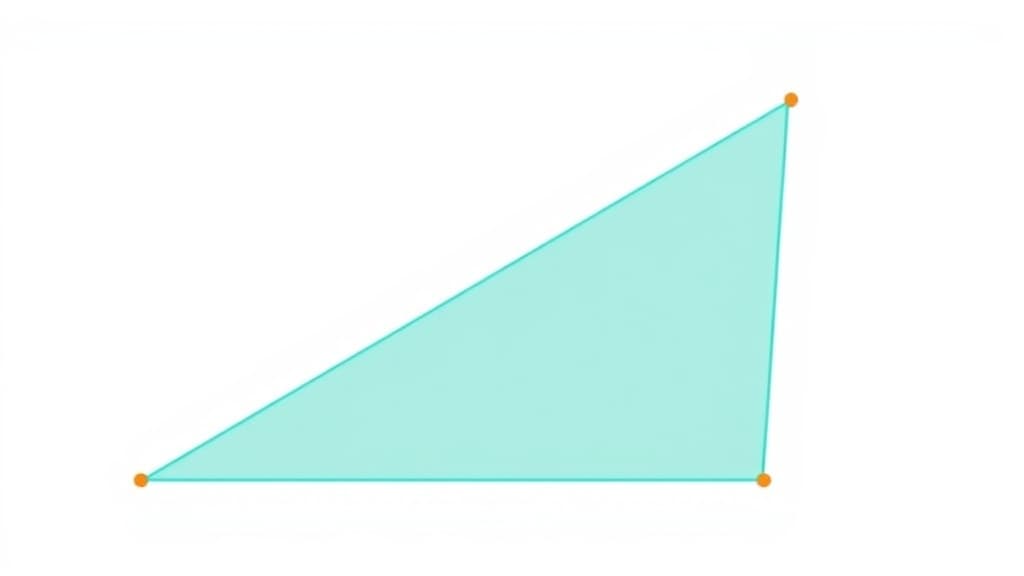
Right Triangle Solver is your child's personal maths tutor available 24/7 inside the free Applaa app. It explains every concept step-by-step, adapts to their level, and never moves on until they actually understand — from KS1 basics to A-Level calculus.
Open Applaa and go to AI Assistants.
Find "Right Triangle Solver" and type the problem in plain English — no special symbols needed.
Get a full worked solution with explanations, then ask follow-up questions until it completely clicks.
Solve right triangles using trigonometry. Here are some of the most popular ways students use Right Triangle Solver every day:
The Right Triangle Solver is a powerhouse tool for students tackling trigonometry, one of the most challenging yet rewarding topics in the UK curriculum. Right-angled triangles form the bedrock of trigonometry: the sine, cosine, and tangent ratios are defined specifically for right triangles, and these ratios unlock solutions to countless real-world problems—from surveying land height to engineering structures to physics calculations. UK students encounter right triangles first in Key Stage 2 (via Pythagoras' theorem), then in Key Stage 3 and 4 (introducing trigonometry for GCSE), and finally in A-Level where trigonometric identities and inverse functions extend the concept dramatically. Yet many students freeze when faced with a right triangle problem, unsure whether to use Pythagoras, sine, cosine, or tangent—or how to set up the equation correctly. Applaa's Right Triangle Solver removes this ambiguity by accepting whatever you know about the triangle (sides and angles) and instantly calculating the unknowns whilst explaining which trigonometric relationship was applied and why. By pairing speed with transparency, this tool transforms trigonometry from a source of fear into a logical, manageable skill set.
Start by identifying what you know: are you given two sides and need the third (use Pythagoras' theorem: a² + b² = c²)? Are you given one side and an angle, and need another side (use sine, cosine, or tangent)? Or are you given two sides and need an angle (use inverse trig functions: arcsin, arccos, arctan)? Enter your known values into the solver, and it displays all three sides and three angles, plus the working showing which formula was applied. Crucially, pay attention to which trig ratio was chosen and *why*—this is the thinking that transfers to new problems. For GCSE candidates, the solver helps you verify your answers, but the real learning is in attempting problems yourself first, then checking. For A-Level, use it to build intuition around how small angle changes affect sides, and to explore trigonometric identities through concrete examples.
Students often confuse which side is opposite/adjacent relative to a given angle, leading to incorrect trig ratios and wildly wrong answers. Another frequent error is forgetting to use the inverse trig function (arcsin, arccos, arctan) when solving for an angle—they apply the ratio backwards without inverting. Some learners apply Pythagoras' theorem to triangles that aren't right-angled, or forget to take the square root after calculating c². GCSE candidates sometimes ignore whether an angle is in degrees or radians, causing scale errors. A-Level students occasionally mix up the domain and range of inverse trig functions, or forget that calculators return only one angle when multiple angles satisfy the equation. By using Applaa's solver and studying its explanation for *why* each step was chosen, you'll internalise these distinctions and avoid exam pitfalls.
Getting started
Download Applaa free and explore with simple right triangles (e.g. 3-4-5 triangles, which form a common pattern)
Sketch a right triangle on paper, label all sides and angles, then input known values into the solver to find the rest
For each solved triangle, verify one answer manually (e.g. use Pythagoras or a trig ratio by hand) to build confidence
During GCSE revision, tackle past paper trigonometry questions; use the solver to check your answers and understand where you went wrong
Give your child the same AI app-building, exam prep and tutoring edge — free for the first month, no credit card needed.
Join 10,000+ students building their first AI-powered apps with Applaa
Use Pythagoras' theorem (a² + b² = c²) when you know two sides of a right triangle and need the third. Use trigonometry (sin, cos, tan) when you know one side and an angle, or need to find an angle.
They're ratios of different sides relative to an angle: sine = opposite/hypotenuse, cosine = adjacent/hypotenuse, tangent = opposite/adjacent. Use SOH-CAH-TOA to remember which is which.
The right angle is always the 90° angle, usually marked with a small square in the corner. The side opposite it (across from it) is the hypotenuse—the longest side.
Yes. A-Level trigonometry extends to non-right triangles (sine rule, cosine rule), reciprocal trig functions (secant, cosecant, cotangent), and trigonometric identities. Understanding right triangles is the foundation for all of these.
Right Triangle Solver and 500+ other safe AI assistants are available free inside the Applaa desktop app.
Explore GCSE, 11+, A-Level, and Olympiad revision modules in the Applaa Learning Hub.
Go to Learning Hub