What do m and c represent in y = mx + c?
m is the gradient (slope) of the line—how steep it is; c is the y-intercept (where it crosses the y-axis). Applaa's interactive tool shows how changing each transforms the line instantly.
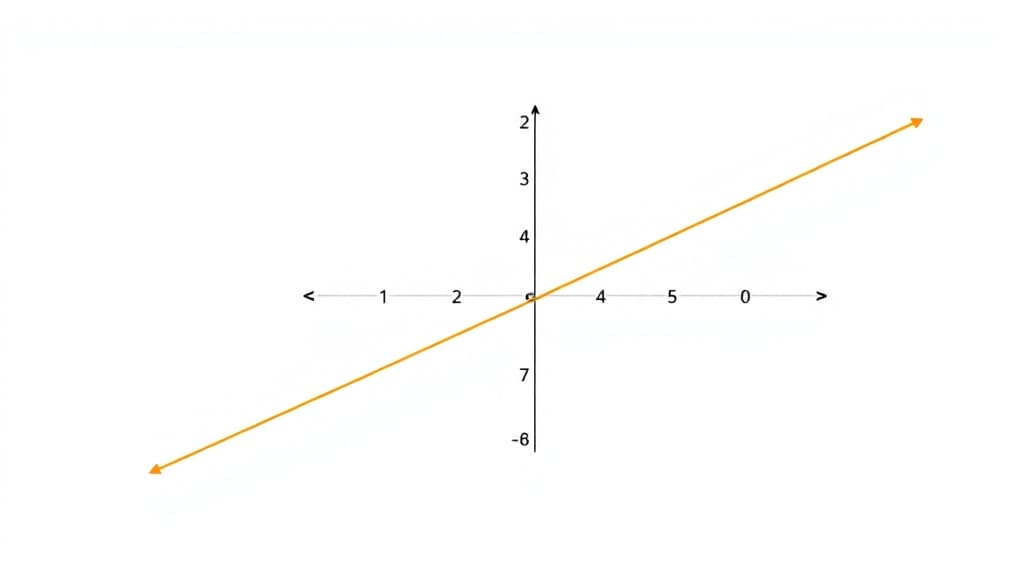
Linear Equation Grapher is your child's personal maths tutor available 24/7 inside the free Applaa app. It explains every concept step-by-step, adapts to their level, and never moves on until they actually understand — from KS1 basics to A-Level calculus.
Open Applaa and go to AI Assistants.
Find "Linear Equation Grapher" and type the problem in plain English — no special symbols needed.
Get a full worked solution with explanations, then ask follow-up questions until it completely clicks.
Plot and understand straight-line graphs. Here are some of the most popular ways students use Linear Equation Grapher every day:
Linear equations and graphs form the backbone of algebra and are essential for understanding relationships between variables in mathematics, physics, economics, and countless real-world applications. For UK students, linear functions are introduced in Key Stage 2, become central to Key Stage 3 algebra, and form a critical foundation for GCSE Maths (both Foundation and Higher Tiers), A-Level Maths, and Further Maths. Yet many students find graphing intimidating: understanding gradient (slope), y-intercept, and how to plot points accurately requires both conceptual understanding and practical execution. Some students memorise y = mx + c without grasping what each component means, while others struggle to convert between different forms of equations (standard form, intercept form, slope-intercept form). Applaa's Linear Equation Grapher tool visualises equations in real-time, showing how changing gradients and intercepts transforms the line, and providing step-by-step guidance for plotting and interpreting graphs. Whether you're plotting your first straight line or mastering parallel and perpendicular lines for A-Level, this free interactive tool makes linear algebra click.
Start by understanding y = mx + c: m is gradient (slope), c is y-intercept (where the line crosses the y-axis). Use Applaa's interactive tool to visualise how changing m rotates the line and changing c shifts it vertically. Plot simple lines (y = x, y = 2x, y = -x) to build intuition. Then tackle lines with different intercepts. Learn to calculate gradient using two points: gradient = (y₂ - y₁) / (x₂ - x₁). Use Applaa's point-clicking tool to verify your gradient calculations. Convert between different forms (standard form, intercept form) using algebraic rearrangement. Finally, apply graphing to real problems: finding intersections, solving simultaneous equations, and modelling real-world relationships.
A frequent error is confusing gradient and y-intercept: students misread which is m and which is c in y = mx + c. When calculating gradient from two points, many subtract in the wrong order (x₂ - x₁ in the numerator instead of denominator) or mix up x and y values. Some students plot only one point, then guess the line's direction, leading to incorrect slopes. Rearranging equations to standard form often goes wrong—students lose track of signs or forget to move terms correctly. Parallel and perpendicular line relationships confuse many students. Applaa's visual feedback and step-by-step rearrangement checks catch these errors immediately.
Getting started
Step 1: Download Applaa free and open Linear Equation Grapher—explore simple equations like y = x and y = 2x
Step 2: Experiment with Applaa's gradient and intercept sliders to see how each changes the line in real-time
Step 3: Learn to calculate gradient from two points using Applaa's guided tool
Step 4: Tackle real GCSE-style problems: find equations from graphs, solve simultaneous equations graphically
Give your child the same AI app-building, exam prep and tutoring edge — free for the first month, no credit card needed.
Join 10,000+ students building their first AI-powered apps with Applaa
m is the gradient (slope) of the line—how steep it is; c is the y-intercept (where it crosses the y-axis). Applaa's interactive tool shows how changing each transforms the line instantly.
Use the formula: gradient = (y₂ - y₁) / (x₂ - x₁) with any two points on the line. Applaa's tool lets you click points and calculates the gradient automatically, then you can verify it.
Parallel lines have the same gradient. For example, y = 2x + 3 and y = 2x - 5 are parallel (both have gradient 2). Applaa's visual tool shows parallel lines side-by-side—notice they never intersect.
Absolutely—roughly 15-20% of GCSE Maths marks involve graphing, simultaneous equations, or interpreting linear relationships. Strong graphing skills unlock multiple question types across the paper.
Linear Equation Grapher and 500+ other safe AI assistants are available free inside the Applaa desktop app.
Explore GCSE, 11+, A-Level, and Olympiad revision modules in the Applaa Learning Hub.
Go to Learning Hub