Why do we use the coordinate system instead of just drawing pictures?
Coordinates let us describe positions precisely and algebraically. Geometry, algebra, and functions are all connected through coordinates—it's the language of modern mathematics.
Coordinate Plane Navigator is your child's personal maths tutor available 24/7 inside the free Applaa app. It explains every concept step-by-step, adapts to their level, and never moves on until they actually understand — from KS1 basics to A-Level calculus.
Open Applaa and go to AI Assistants.
Find "Coordinate Plane Navigator" and type the problem in plain English — no special symbols needed.
Get a full worked solution with explanations, then ask follow-up questions until it completely clicks.
Plot points and understand quadrants. Here are some of the most popular ways students use Coordinate Plane Navigator every day:
Plotting points, understanding quadrants, and working with coordinates form the backbone of GCSE and A-Level geometry, transformations, and algebra. Yet many UK students struggle with the coordinate system—confusing which axis is which, mixing up order of coordinates (x always comes first!), or misinterpreting negative values in different quadrants. Our Coordinate Plane Navigator takes the confusion out of the coordinate system, letting you interactively plot points, explore reflections, rotations, and translations in real time. The visual feedback is instant: plot (3, -2) and see exactly where it lands in the fourth quadrant, why it's there, and how it relates to the axes. Free and designed for KS3, GCSE, and A-Level students alike, Applaa's navigator builds spatial reasoning that transforms geometry from abstract to intuitive. Explore curves, investigate transformations, and develop the coordinate sense that underpins modern mathematics.
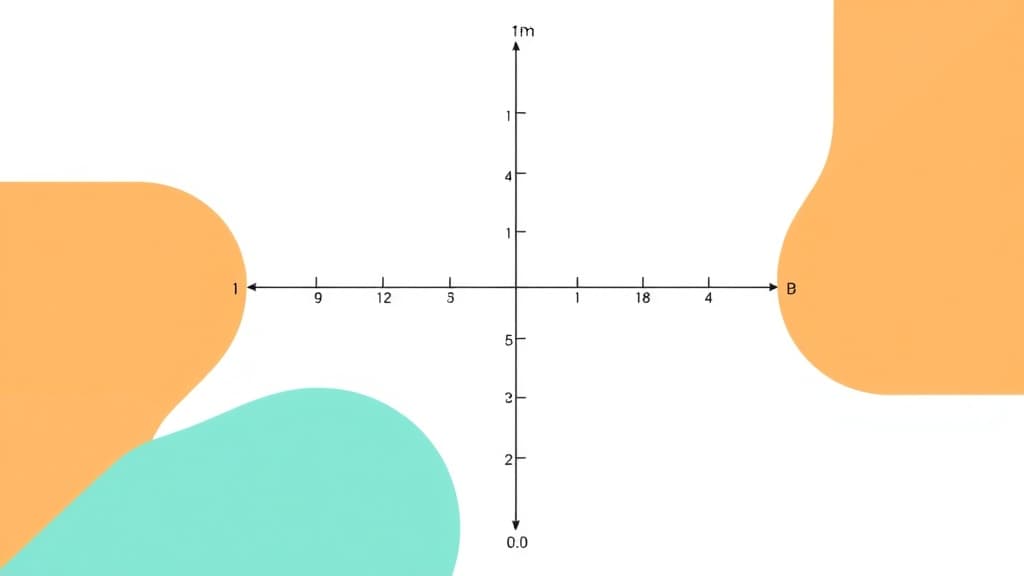
Always remember: x comes first (horizontal), y comes second (vertical). Start at the origin (0, 0) and move right for positive x, left for negative x; up for positive y, down for negative y. The four quadrants are I (top-right, both positive), II (top-left, x negative, y positive), III (bottom-left, both negative), and IV (bottom-right, x positive, y negative). When plotting a point like (-3, 4), start at the origin, move 3 units left, then 4 units up. The Navigator shows this process visually, pausing at each step so you understand the logic. Try plotting different points and noticing patterns: all points on a vertical line have the same x-coordinate; all points on a horizontal line share the same y-coordinate.
The most frequent error is reversing x and y: students plot (2, 5) as if it were (5, 2), completely missing the point. Another widespread mistake is misunderstanding negative coordinates—thinking (-3, -2) is somehow closer to the origin than (3, 2) (it's actually the same distance, just in a different direction). Students also often confuse the quadrants, forgetting that quadrant III has both negative x and y. When reflecting or rotating points, many forget to change signs correctly or lose track of which transformation they're performing. Some also struggle with the axes themselves, plotting axes labels incorrectly or forgetting where the origin sits.
Getting started
Download Applaa free and open the Coordinate Plane Navigator—immediately see axes and quadrants in colour
Plot ten simple points (like (1,1), (2,0), (-1,3)) by dragging, watching how coordinates match position
Explore all four quadrants systematically, noticing how coordinates change as you cross axes
Practice reflections and rotations, verifying your predictions by comparing before and after on the grid
Give your child the same AI app-building, exam prep and tutoring edge — free for the first month, no credit card needed.
Join 10,000+ students building their first AI-powered apps with Applaa
Coordinates let us describe positions precisely and algebraically. Geometry, algebra, and functions are all connected through coordinates—it's the language of modern mathematics.
The x-axis is horizontal (like an 'X' lying flat). The y-axis is vertical (like a 'Y' standing tall). Our visual navigator reinforces this every time you plot.
Transformations, trigonometry (sine and cosine change sign in different quadrants), and graphing inequalities. Understanding quadrants helps you predict how graphs behave.
Reflections flip points across axes (changing signs strategically). Rotations spin points around the origin by a set angle. Our Navigator shows both visually, so you see coordinates change as the shape transforms.
Coordinate Plane Navigator and 500+ other safe AI assistants are available free inside the Applaa desktop app.
Explore GCSE, 11+, A-Level, and Olympiad revision modules in the Applaa Learning Hub.
Go to Learning Hub