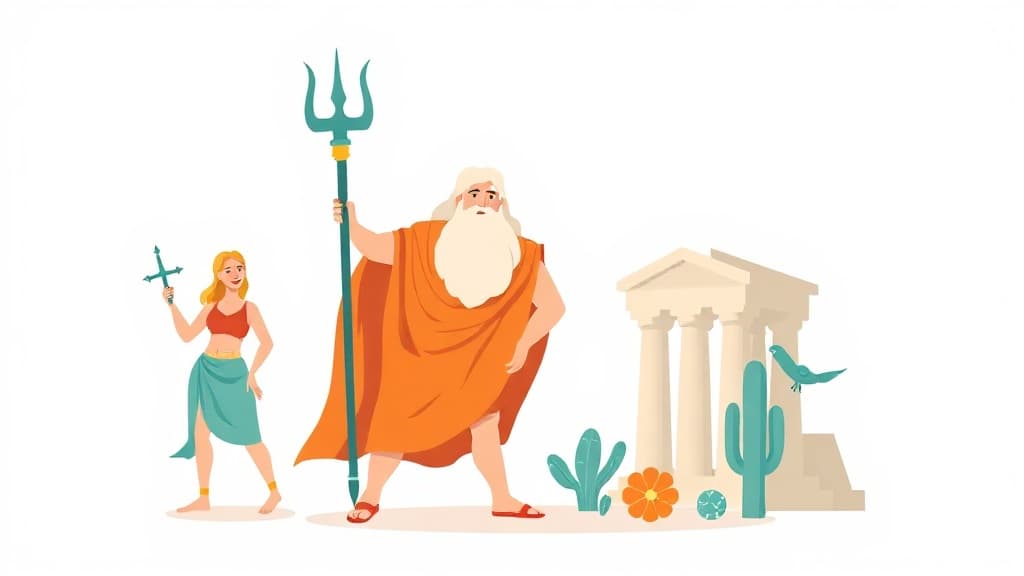
World Greek Mythology brings history and social studies to life through rich, engaging storytelling. It connects past events to the present, presents multiple perspectives fairly, and makes every topic genuinely relevant — turning dates and facts into compelling human stories.
Help me understand this topic for my school revision.
👨💻
I'd love to help! Let's break this down into bite-sized pieces.
First, tell me what year group you are in and if you have any homework questions. I will explain it step-by-step with real-world examples, and we can do a quick quiz at the end to make sure it makes perfect sense!
How to use World Greek Mythology
1
Open Applaa and select this tool from AI Assistants.
2
Ask your history or social studies question — events, people, causes, consequences, or context.
3
Get a clear, engaging explanation with key facts and broader historical context.
What you can do with World Greek Mythology
Zeus, Athena, and more. Here are some of the most popular ways students use World Greek Mythology every day:
Turns dry facts into fascinating, memorable narratives
Explains historical context and diverse perspectives
Perfect for homework, revision, and genuine curiosity about the world
Ask unlimited follow-up questions — the AI never loses patience or gives up on you
Works alongside any textbook, worksheet, or school resource
Greek mythology appears everywhere in UK secondary school curricula—from English literature and Classics exams to drama and art projects—yet many students struggle to remember which god does what or why certain myths matter. Applaa's World Greek Mythology tool transforms mythology from a confusing list of names into a living, interconnected system of stories that reveal how ancient Greeks understood their world. You'll explore Zeus and his power struggles, Athena's wisdom and military strategy, Aphrodite's influence over love and desire, and dozens of other gods, goddesses, and legendary heroes. This tool is essential for GCSE Classics students, KS4 English learners studying texts featuring mythological references, and anyone tackling drama adaptations of classic myths. Rather than passive reading, you interact with the material: follow family trees of gods and their relationships, trace the journeys of heroes like Odysseus and Hercules, and discover how myths explain natural phenomena and human nature. Applaa's mythology tool emphasises the *structure* of Greek belief—how gods were petty, powerful, and flawed, much like humans—which is the insight examiners and teachers genuinely want to see. Whether you're writing an essay on *The Odyssey*, creating a drama project based on Greek theatre, or simply fascinated by ancient stories, this tool provides context that brings mythology alive.
50+
Gods, goddesses, and heroes with full profiles
200+
Complete myths and legendary journeys explained
100%
Free forever—no hidden fees
How to use World Greek Mythology effectively
Start with the Olympian gods overview to understand the main twelve deities and their domains—Zeus rules the sky, Poseidon the sea, Hades the underworld, and so on. Each god has a detailed profile including symbols, relationships, and associated stories. Next, explore specific myths in chronological order: the creation of the Titans, the Titanomachy (war between Titans and Olympians), and the subsequent age of heroes. Read these myths actively, noting patterns: gods' human flaws despite their power, consequences for hubris and pride, and how mortals interact with divine beings. Create a family tree of the gods to visualise relationships—this is crucial for understanding conflicts and alliances. Finally, connect myths to themes in literature and drama you're studying; if you're reading *The Odyssey*, use this tool to understand Odysseus's interactions with various gods and why their involvement matters.
Build a family tree of the Olympian gods and major Titans to understand relationships and conflicts between divine beings
Read complete myth narratives rather than summaries; the full stories reveal character motivations and moral lessons ancient Greeks valued
Connect each god's symbols and domains to their role in specific myths, building genuine understanding rather than memorised facts
Compare different versions of myths where they exist; ancient sources sometimes told the same story differently, showing cultural evolution
Trace hero journeys like Odysseus, Perseus, or Heracles, noting how they interact with gods and how their actions reflect Greek values
Use mythology to understand themes in literature you're studying—recognise allusions and references that teachers and examiners expect you to catch
Common mistakes with World Greek Mythology
Students often treat gods as purely evil or purely good, missing the point that Greek gods were powerful and flawed simultaneously—they could be cruel, petty, and loving depending on circumstance. Another mistake is memorising a huge list of gods without understanding their relationships and domains, making it impossible to retain anything. Many learners fail to see the *logic* in myths, treating them as random stories rather than cautionary tales reflecting Greek values about justice, pride, fate, and mortality. Students also sometimes confuse Roman and Greek names (Zeus/Jupiter, Aphrodite/Venus), which confuses their essays. Finally, people often skip reading actual myths, relying on summaries instead—this means they miss the language, humour, and emotional depth that make mythology meaningful and memorable.
Don't reduce gods to single traits; Zeus is powerful but also prone to poor decisions and selfish desires—this complexity is essential
Avoid memorising god lists in isolation; understand relationships (Aphrodite's love affairs, Athena's rivalry with Poseidon, Apollo and Artemis as siblings)
Don't treat myths as random; recognise patterns in how they teach values: consequences for hubris, importance of piety, power of fate
Remember Greek names (Zeus, Aphrodite) rather than Roman equivalents; UK exams rarely accept 'Jupiter' when 'Zeus' is the correct term
Read actual myth texts—even simplified versions—rather than relying solely on summaries, which strip away nuance and memorability
Don't assume you understand a myth from one reference; the same story may appear in different sources with varying details and emphases
Getting started
Getting Started with World Greek Mythology
Step 1
Download Applaa free and navigate to History & Social Studies to find World Greek Mythology
Step 2
Start with the Olympian gods overview and create your own family tree of major deities
Step 3
Read three complete myths of your choice, taking notes on themes, characters, and moral lessons
Step 4
Connect what you've learned to a literature or drama text you're studying in school
1 month free, then 50% off for 3 months — £4.99/mo
While Other Kids Get an AI Head Start, Is Yours Falling Behind?
Give your child the same AI app-building, exam prep and tutoring edge — free for the first month, no credit card needed.
Join 10,000+ students building their first AI-powered apps with Applaa
Frequently asked questions about World Greek Mythology
Will this help me with my GCSE Classics exam?
Absolutely. GCSE Classics heavily emphasises understanding mythology as a system reflecting Greek values and beliefs. This tool teaches that framework explicitly, so you're learning exactly what examiners want to see in your answers.
How does this help with English Literature when we study texts with mythological references?
Many English texts allude to Greek myths—writers assume readers recognise these references. Understanding the myths behind allusions lets you spot and analyse them, which significantly strengthens literary analysis and essay grades.
Are there different versions of the same myth?
Yes—different ancient sources (Homer, Hesiod, Ovid) sometimes told myths differently. The tool notes these variations and explains why they exist, teaching you that ancient storytelling evolved over time rather than being fixed.
Do I need to know all the gods or just the main Olympians?
Start with the 12 Olympians and major Titans to build a solid foundation. Once you're comfortable, explore secondary gods and creatures—this depth will impress teachers and help you spot references in literature that other students miss.