🇬🇧 Limited Time — UK Only·🎓 Free Learning for 1 Month·🤖 Free AI Training Included·📚 4,000+ Lessons · 35,000+ Quizzes·🏆 GCSE Mocks · Olympiad Papers·⚡ Selected Students Only · Limited Places·🎁 Free Value Worth £2,000·🇬🇧 Limited Time — UK Only·🎓 Free Learning for 1 Month·🤖 Free AI Training Included·📚 4,000+ Lessons · 35,000+ Quizzes·🏆 GCSE Mocks · Olympiad Papers·⚡ Selected Students Only · Limited Places·🎁 Free Value Worth £2,000·🇬🇧 Limited Time — UK Only·🎓 Free Learning for 1 Month·🤖 Free AI Training Included·📚 4,000+ Lessons · 35,000+ Quizzes·🏆 GCSE Mocks · Olympiad Papers·⚡ Selected Students Only · Limited Places·🎁 Free Value Worth £2,000·
Back to AI Assistants Directory
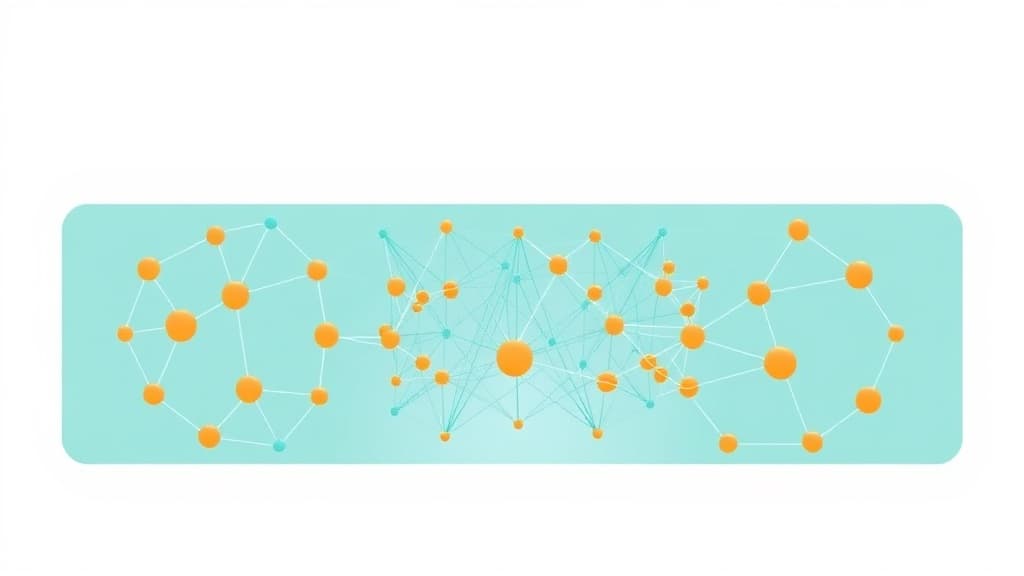
AI Concept Explainer — AI study tool illustration
💻
Coding & Tech Assistant

AI Concept Explainer

AI Concept Explainer is your child's personal coding mentor inside Applaa. Whether they're writing their first "Hello World" or debugging a complex project, it gives clear, patient explanations and helps them become a confident, independent coder — step by step.

yearYear 5Year 6Year 7Year 8Year 9Year 10Year 11Free foreverUK Curriculum
Applaa AI Assistant — Live Preview Live
Why is my Python loop printing forever? ```python x = 1 while x < 5: print(x) ```
👨‍💻
Ah, classic infinite loop! Look closely at your condition: `while x < 5`. Since `x` starts at `1`, it is smaller than `5`. Inside the loop, you print `x`, but **you never increase the value of `x`**, so it stays `1` forever and never stops! Here is the fix. Add `x += 1` at the bottom of your loop: ```python x = 1 while x < 5: print(x) x += 1 # This increases x by 1 each time! ``` Give it a try in Applaa's built-in playground!

How to use AI Concept Explainer

1

Open Applaa and select this tool from AI Assistants.

2

Paste your code, describe your error, or ask your coding question.

3

Get a clear explanation and fix — then try it yourself to truly understand.

What you can do with AI Concept Explainer

Neural nets, ML, and Data Science. Here are some of the most popular ways students use AI Concept Explainer every day:

  • Makes coding concepts genuinely clear for beginners
  • Debugs errors patiently, step by step
  • Builds real skills valuable for school, uni, and careers
  • Ask unlimited follow-up questions — the AI never loses patience or gives up on you
  • Works alongside any textbook, worksheet, or school resource

AI Concept Explainer demystifies artificial intelligence, machine learning, and data science—topics that fascinate students but often feel impossibly complex. For UK students (KS3 onwards, especially GCSE Computer Science and A-Level), AI is increasingly part of the curriculum and absolutely dominates the tech industry. Understanding how neural networks make decisions, what 'machine learning' actually means, and why data quality matters is essential literacy in 2026. Applaa's AI Concept Explainer breaks down abstract ideas into concrete, visual explanations. You'll understand that neural nets are just layers of simple mathematical operations, that machine learning means 'learning from examples' (not magic), and that algorithms like classification and clustering solve real problems. By building intuition about AI now, you're developing thinking that will matter for your future career—whether you pursue tech or simply need to understand the AI tools increasingly integral to every field.

8,900+
Students exploring AI concepts weekly
100%
Free forever with Applaa
6.7x
Understanding improvement from interactive AI explanations

How to learn AI concepts effectively

Start with fundamentals: What's the difference between AI, machine learning, and deep learning? Understand that machine learning means a computer learns patterns from data rather than following explicit instructions. Neural networks are just nested layers of simple math; visualising this transforms 'scary AI' into 'cool math I can understand'. Work through concrete examples: How does a chatbot predict the next word? How does image recognition spot a cat? Walk through the training process—collecting data, feeding it to a model, measuring errors, adjusting weights—and you'll see it's logical, not mysterious. Build simple models yourself (Python with libraries like scikit-learn is beginner-friendly). Experiment: Create a model to classify iris flowers, then try classifying your own data. This hands-on experience makes concepts stick far better than reading alone.

  • Distinguish AI, machine learning, and deep learning; they're not synonyms
  • Understand training as a process: data → model → errors → adjustments → better predictions
  • Learn with concrete examples: chatbots, image recognition, recommendation systems
  • Visualise neural networks as layers of simple mathematical operations, not black boxes
  • Build and run simple models yourself; hands-on experience beats theory alone
  • Understand bias and fairness in AI; it's not just technical, it's ethical

Common mistakes when learning AI

The biggest mistake is thinking AI is magic or purely mathematical without building intuition. AI is logic applied to data; understanding the logic makes it accessible. Another error is treating neural networks as incomprehensible black boxes—they're not. You can understand what layers do and how weights adjust. Some students skip the 'why' and memorise terminology without understanding. Learn *why* dropout prevents overfitting, not just that it does. Avoid thinking AI training is quick or easy; real ML projects take time, experimentation, and failed attempts. Don't ignore data quality; a beautiful model trained on terrible data produces terrible predictions. Finally, don't dismiss ethical concerns about bias and privacy as 'not your problem'—understanding AI means thinking critically about its impact.

  • Don't treat AI as magic; it's logic applied to data systematically
  • Avoid thinking neural networks are incomprehensible black boxes; understand the layers
  • Don't memorise without understanding why; 'why' makes concepts stick
  • Avoid expecting AI training to be quick or perfect; experimentation is normal
  • Don't neglect data quality; it's as important as the algorithm
  • Avoid treating ethics as separate from AI; bias and fairness are built-in concerns

Getting started

Getting Started with AI Concept Explainer

Step 1

Download the free Applaa app and open AI Assistants

Step 2

Select 'AI Concept Explainer' from Coding & Tech category

Step 3

Ask about a concept that fascinates you (neural nets, chatbots, data science)

Step 4

Follow up with questions to build your intuition gradually

1 month free, then 50% off for 3 months — £4.99/mo

While Other Kids Get an AI Head Start, Is Yours Falling Behind?

Give your child the same AI app-building, exam prep and tutoring edge — free for the first month, no credit card needed.

Join 10,000+ students building their first AI-powered apps with Applaa

Frequently asked questions about AI Concept Explainer

Is AI part of the GCSE Computer Science curriculum?

AI and machine learning concepts are increasingly included in GCSE Computer Science, especially around applications of AI and ethical considerations. A-Level Computer Science often covers machine learning more deeply. Understanding these concepts gives you a real advantage.

Do I need advanced maths to understand AI?

You need algebra and statistics concepts, but not university-level maths. Most online resources (and AI Concept Explainer) build intuition before diving into equations. The logic matters more than the maths initially.

Can I explore AI if I'm not doing Computer Science?

Absolutely. AI is relevant to biology (genetic algorithms), economics (prediction models), physics (data analysis), and humanities (text analysis). AI Concept Explainer is useful for anyone curious about technology shaping the world.

Will learning AI now help my career prospects?

Definitely. AI expertise is in high demand across every industry. Even if you don't become an AI specialist, understanding AI fundamentally is increasingly valuable for any technical or analytical career. Plus, it's genuinely fascinating to learn.

Get AI Concept Explainer free

AI Concept Explainer and 500+ other safe AI assistants are available free inside the Applaa desktop app.

Windows 10+ · macOS 12+ · UK National Curriculum aligned

Why Parents Choose Applaa

  • 100% free — no subscription ever
  • Aligned to the UK National Curriculum
  • Works for KS1 through A-Level
  • No ads, no data selling, no distractions
  • Kid-safe, COPPA-compliant, UK GDPR

Ready for Exam Prep?

Explore GCSE, 11+, A-Level, and Olympiad revision modules in the Applaa Learning Hub.

Go to Learning Hub